
Outsourcing decisions are harder than they look because the options are different. Some vendors are open marketplaces where you source and manage individuals yourself. Others are directories that help you discover agencies. Others are managed providers that recruit, train, supervise, and report on workstreams for you. That difference matters more than branding. In 2025, buyers are judging providers by specialization, scale, and economic impact, not just name recognition, as the broader U.S. business services market is projected to reach $18.8 trillion in 2026 and now accounts for roughly 65% of U.S. GDP, according to NMS Consulting.
To narrow the field quickly, choose a marketplace if you want flexibility and are willing to manage hiring quality yourself; choose a managed provider if you need reliable execution, reporting, and less internal oversight; choose a directory if you are still in discovery mode and want to compare firms before entering a sales process. That distinction is more useful than any feature list because it immediately separates short-term freelancer needs from long-term operational outsourcing.
This guide keeps the core 12-provider list but makes the decision process clearer. You’ll find options for AI data work, IT and technical projects, customer support, finance-adjacent operations, and outsourced back-office services for startups scaling fast.
How We Evaluated These Business Outsourcing Services
We assessed each provider against the same practical criteria rather than treating every outsourcing platform as interchangeable. First was provider type: marketplace, directory, or managed provider. That affects pricing, onboarding, and how much day-to-day management the client must own. Second was talent quality and specialization: we looked for evidence that a platform or provider could support real business use cases such as multilingual operations, technical hiring, CX, data annotation, or back-office execution.
Third was onboarding speed and pricing transparency. Some teams need a contractor this week; others need a partner that can ramp a trained team over several weeks with documented processes and QA. Fourth was security and compliance signaling, especially for regulated workflows, sensitive customer data, and enterprise procurement. That matters because the best outsourcing decisions in 2025 are increasingly tied to measurable outcomes and managed-service maturity; broader consulting and managed services continue to grow, with Consulting Success noting a global management consulting market above $1 trillion and U.S. IT managed services at roughly $380 billion.
We also scored where each option is a poor fit. A provider did not make sense for this list if it lacked a clear business use case, had no visible path for serious operational work, or was only suitable for one-off consumer tasks. What stood out to us was how often buyers overlook management overhead: a low-cost freelancer can become expensive if your team has to supervise every deliverable, rebuild documentation, and redo QA.
1. Zilo AI
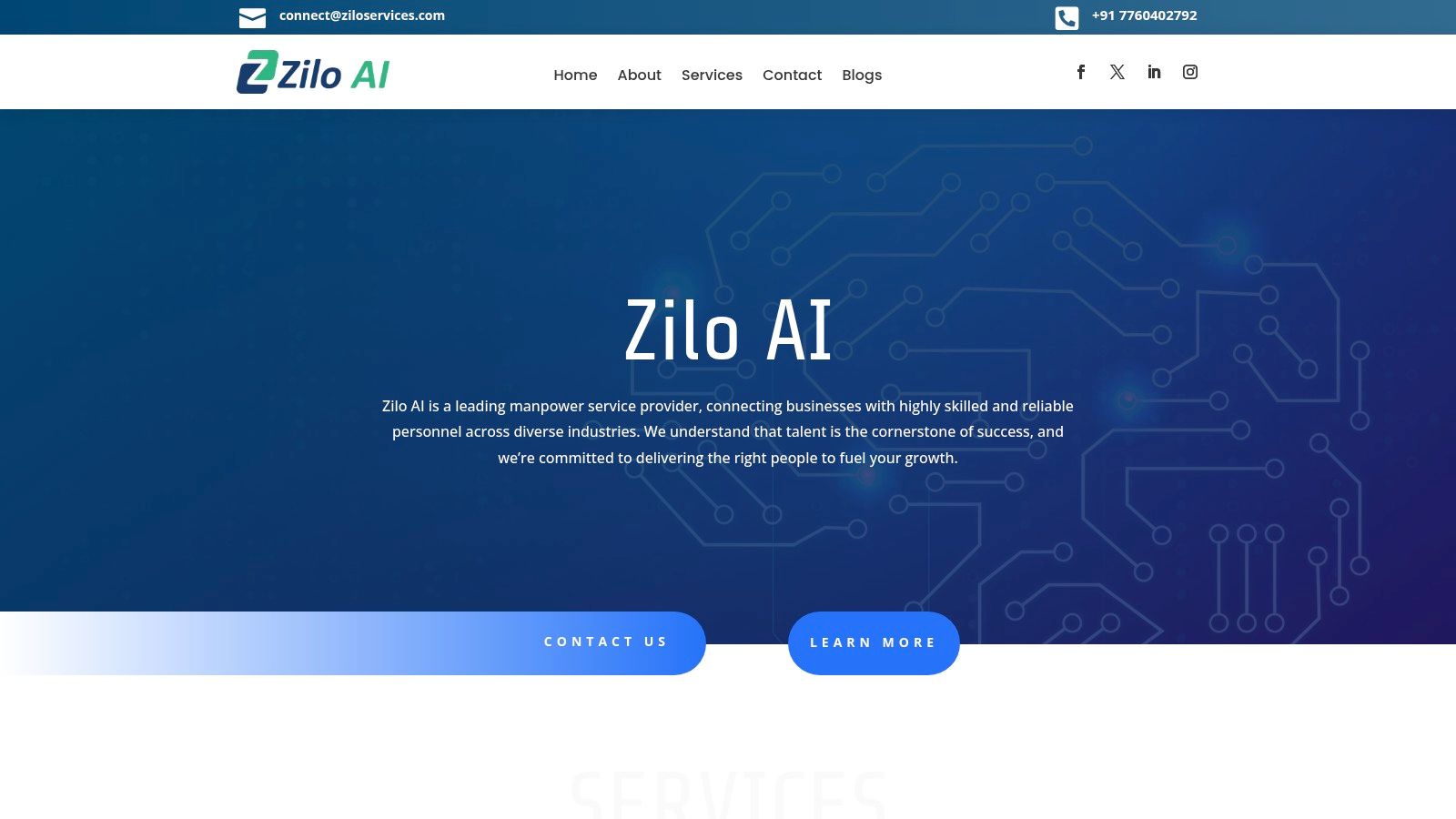
Zilo AI is strongest when the work sits at the intersection of operations and AI enablement. Instead of acting like a self-serve freelance board, it is better understood as a consultative outsourcing platform for teams that need structured delivery in areas such as data annotation, multilingual support, transcription, translation, and specialist manpower. That matters for buyers who are not just filling a seat but trying to build a repeatable workflow with quality controls.
Why it stands out for AI-heavy operations
Open freelance marketplaces can work for isolated labeling tasks or ad hoc language support, but they usually leave the buyer responsible for task design, reviewer calibration, throughput planning, and quality monitoring. Zilo AI is more useful when the work needs process discipline from the start. If you are preparing multilingual conversational data, managing text and speech annotation, or combining data work with broader back-office support, a consultative provider reduces fragmentation. That is especially relevant for AI teams in BFSI, healthcare, retail, and research environments where consistency matters as much as raw volume.
The other differentiator is combination. Many vendors can provide either contractors or managed operations; fewer can support specialized manpower and AI-ready data programs under one umbrella. For a startup scaling quickly, that can mean less context switching between separate recruiting, operations, and vendor-management tracks. For an enterprise team, it creates a cleaner escalation path than stitching together multiple freelancers across time zones.
Where it fits best
Zilo AI is best for companies that already know the work is business-critical and do not want to run it as a DIY freelance project. Good-fit buyers include startups building AI features that need annotated data and multilingual support, operations teams looking for a reliable outsourcing platform for recurring back-office tasks, and larger organizations that need domain-aware manpower rather than generic gig labor. In our review, this option stood out most for teams that needed output quality and workflow structure, not just access to labor.
It is also a better fit than many outsourcing platforms when the handoff requires consultation. If your workflow includes training guidelines, QA thresholds, language nuance, or role-specific staffing expectations, a managed or consultative model usually outperforms self-serve hiring. Their published insights on data-driven decision-making strategies also align with the kind of operational maturity buyers should expect from a provider in this category.
What to clarify before signing
The tradeoff is that this is not an instant-checkout marketplace. Pricing is custom, and buyers should expect a sales conversation before they understand scope, ramp timelines, and minimum engagement expectations. Ask specifically about onboarding lead time, who owns quality review, what reporting looks like, whether weekend support is available for your use case, and how quickly additional capacity can be added if volumes change.
For startup back-office support, also clarify whether the team will be dedicated or shared, how training is documented, and how errors are tracked and corrected. For enterprise buyers, the important questions shift toward data handling, auditability, escalation paths, and whether the delivery model aligns with procurement and compliance requirements.
Website: Zilo AI
| Decision Factor | What it means in practice |
|---|---|
| Provider model | Consultative provider rather than a self-serve marketplace; better when work needs structure and ongoing QA. |
| Strongest use cases | AI data annotation, multilingual operations, transcription, translation, and specialist manpower. |
| Startup fit | Strong for teams that are scaling quickly and need managed support instead of assembling freelancers one by one. |
| Enterprise fit | Better for buyers that need process consistency, domain knowledge, and cleaner oversight. |
| Pricing reality | Custom quotes only, so planning requires a discovery step. |
| Main caution | Clarify minimum volume, turnaround expectations, and support coverage before committing. |
2. Upwork
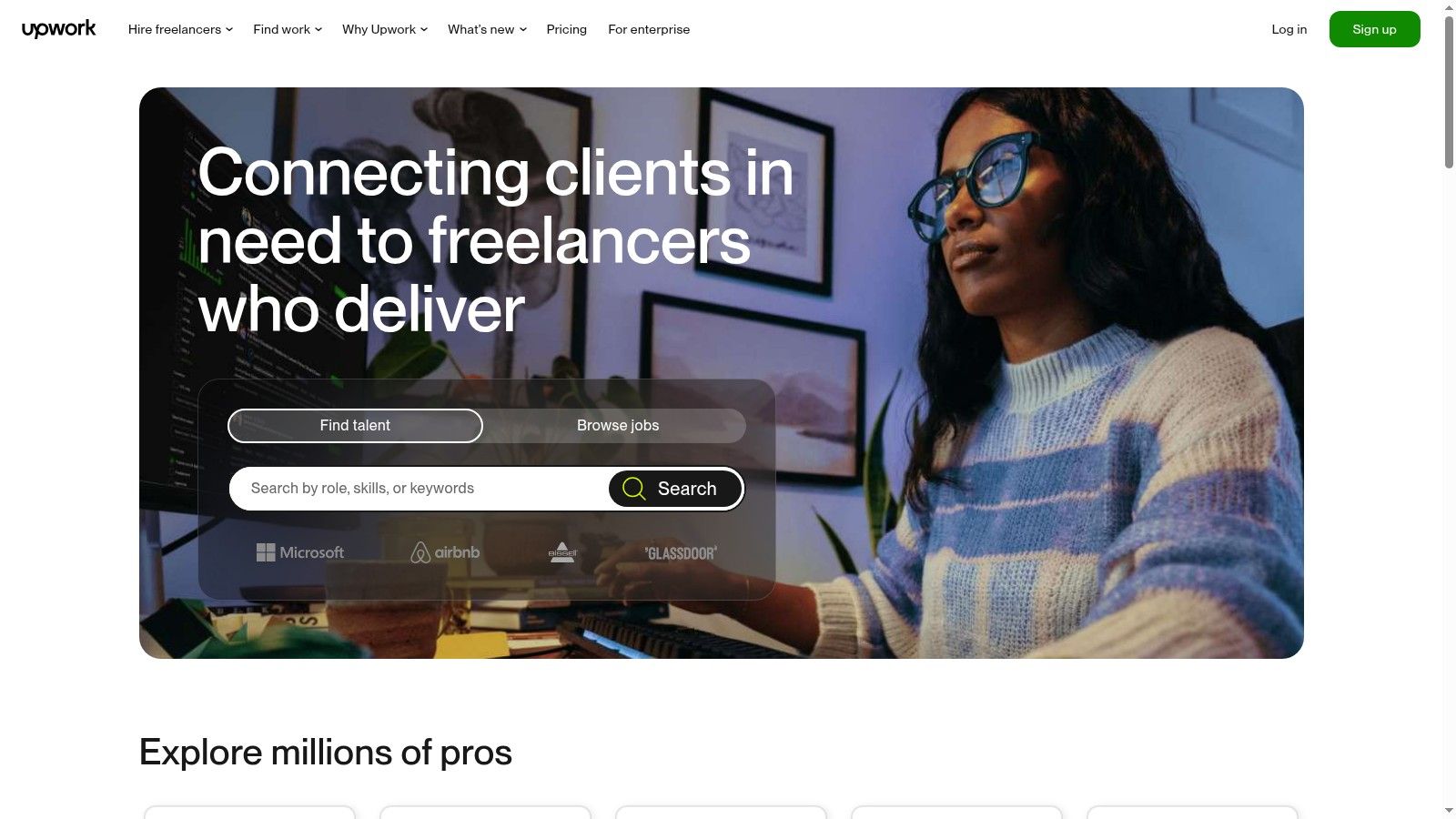
Upwork remains one of the best outsourcing platforms when you need speed, flexibility, and direct control over who does the work. It is not a managed BPO and does not pretend to be one. It is a marketplace, which means the upside is breadth and pricing control; the downside is that vetting, supervision, and quality consistency largely stay with you.
Best when you need flexibility
If your company needs a virtual assistant, a designer for a two-week sprint, a developer for a scoped integration, or a short-term IT specialist, Upwork is often the quickest route. You can post a job, review proposals, compare rates, and start with a test project fast. That makes it one of the most practical choices for businesses that value optionality and do not want to commit to a long sales cycle.
A marketplace is usually the right choice when the task is clear, the deliverable is measurable, and your team can manage the work directly. Admin support, creative production, QA testing, lightweight development, and project-based technical troubleshooting can work well here. Buyers gain a significant advantage when they already know how to brief, screen, and manage freelancers.
Hidden management costs
Upwork gives you rate visibility and broad choice, but the total cost is not just the freelancer’s fee plus the marketplace charge. A key variable is management overhead. Someone on your team still needs to write a solid brief, compare candidates, interview them, monitor delivery, and step in if quality slips. On an open marketplace, lower upfront cost can turn into slower execution if the workflow is ambiguous or the work requires ongoing calibration.
A managed provider can be the better option. If you need regulated back-office workflows, high-volume repetitive operations, or a team that requires centralized QA and reporting, Upwork is usually the wrong structure. Those needs are closer to BPO territory, where you are buying process management as much as labor.
How to avoid poor-fit hires
The fastest way to waste money on Upwork is to hire on profile polish alone. Use a paid test, ask for work samples directly related to your project, and evaluate communication before technical depth. For recurring work, start with a tightly scoped milestone rather than a broad retainer. If the task touches customer data, finance operations, or compliance-sensitive processes, verify exactly how access, confidentiality, and oversight will be handled.
Companies often do well on Upwork with admin support, short-term IT projects, content production, research, and creative work. They usually struggle when trying to run regulated finance processes, large multilingual support operations, or managed back-office programs through individual freelancers. For specialized talent discovery beyond generalist marketplaces, some teams also compare niche hiring resources such as remote DevOps engineer jobs when the role is very technical.
Website: Upwork
3. Fiverr Pro
Fiverr Pro elevates the popular freelance marketplace model by offering a curated selection of top-tier talent specifically for business outsourcing services. This premium tier focuses on professional needs like marketing, creative projects, web development, and data services. It's designed for companies that need reliable, high-quality deliverables without the extensive vetting process often required on larger, more open platforms.
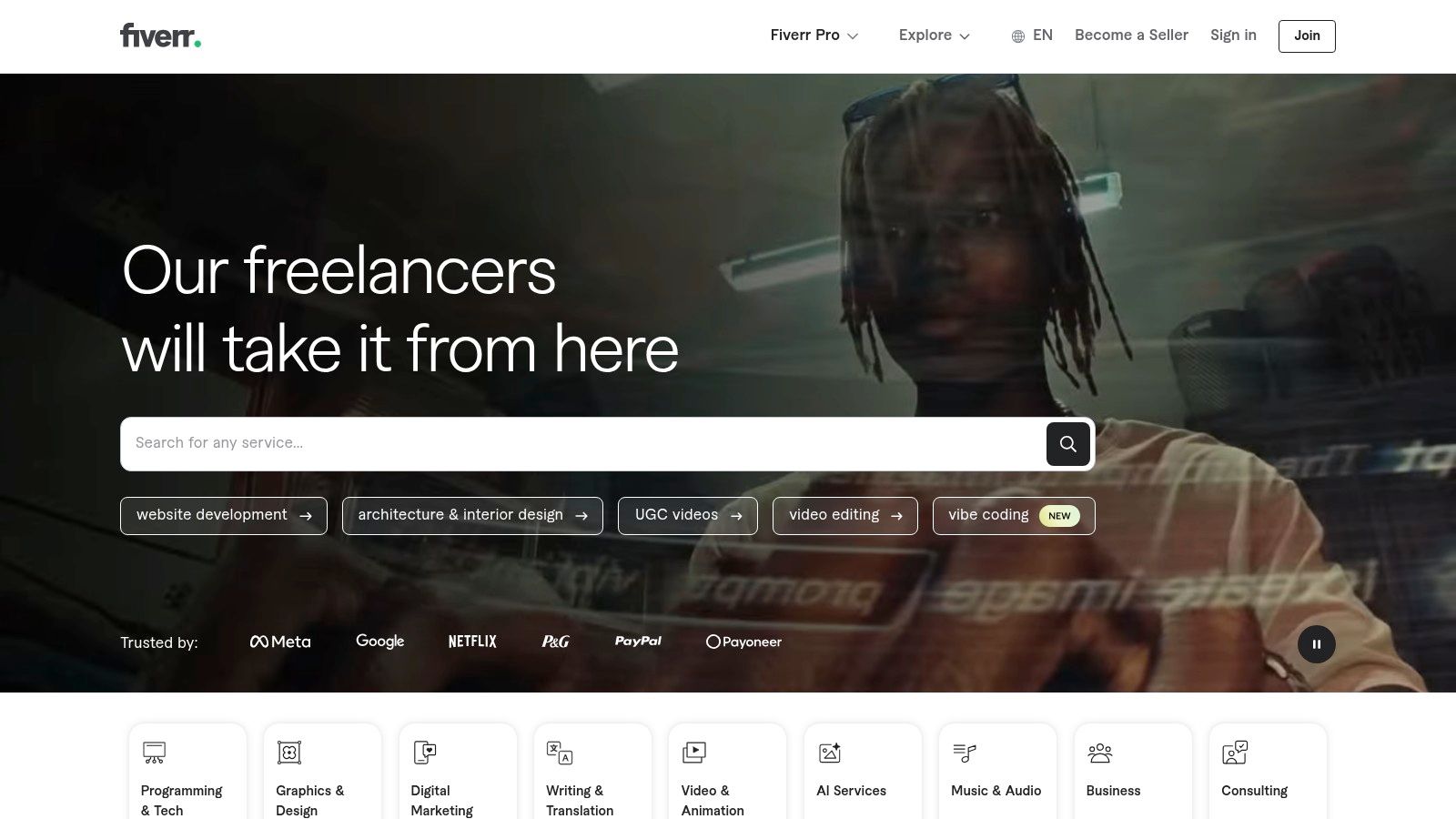
What distinguishes Fiverr Pro is its pre-vetted talent pool. Pro sellers undergo a rigorous application process, ensuring they have a proven track record of professional excellence and client satisfaction. For businesses, this translates to reduced risk and faster hiring for critical projects. The platform also offers dedicated business tools for team collaboration, consolidated billing, and project management, streamlining the entire outsourcing workflow from a single dashboard.
Key Considerations
- Best For: Marketing departments needing quick turnarounds on creative assets, tech startups looking for specialized development expertise, and businesses requiring vetted professionals for high-stakes projects.
- Pricing Model: Freelancers offer services as fixed-price "Gigs." Fiverr Pro also has subscription plans for businesses that add features like compliance tools and dedicated success managers.
- Vetting Tip: While Pro sellers are pre-vetted, it's still important to engage with them directly. Review their specific Pro portfolio, ask clarifying questions about their process, and ensure their communication style aligns with your team's needs before purchasing a Gig.
Fiverr Pro's subscription plans offer add-on services like expert sourcing and worker classification, providing a flexible solution that bridges the gap between on-demand freelance hiring and more structured enterprise-level outsourcing.
Website: https://www.fiverr.com
4. Toptal
Toptal positions itself as an exclusive network for the top 3% of freelance talent, offering premium business outsourcing services for companies that cannot afford to compromise on quality. It connects businesses with a heavily vetted global pool of senior-level experts in software development, design, finance, product management, and project management. This focus on elite talent makes it a go-to platform for mission-critical or technically complex projects.
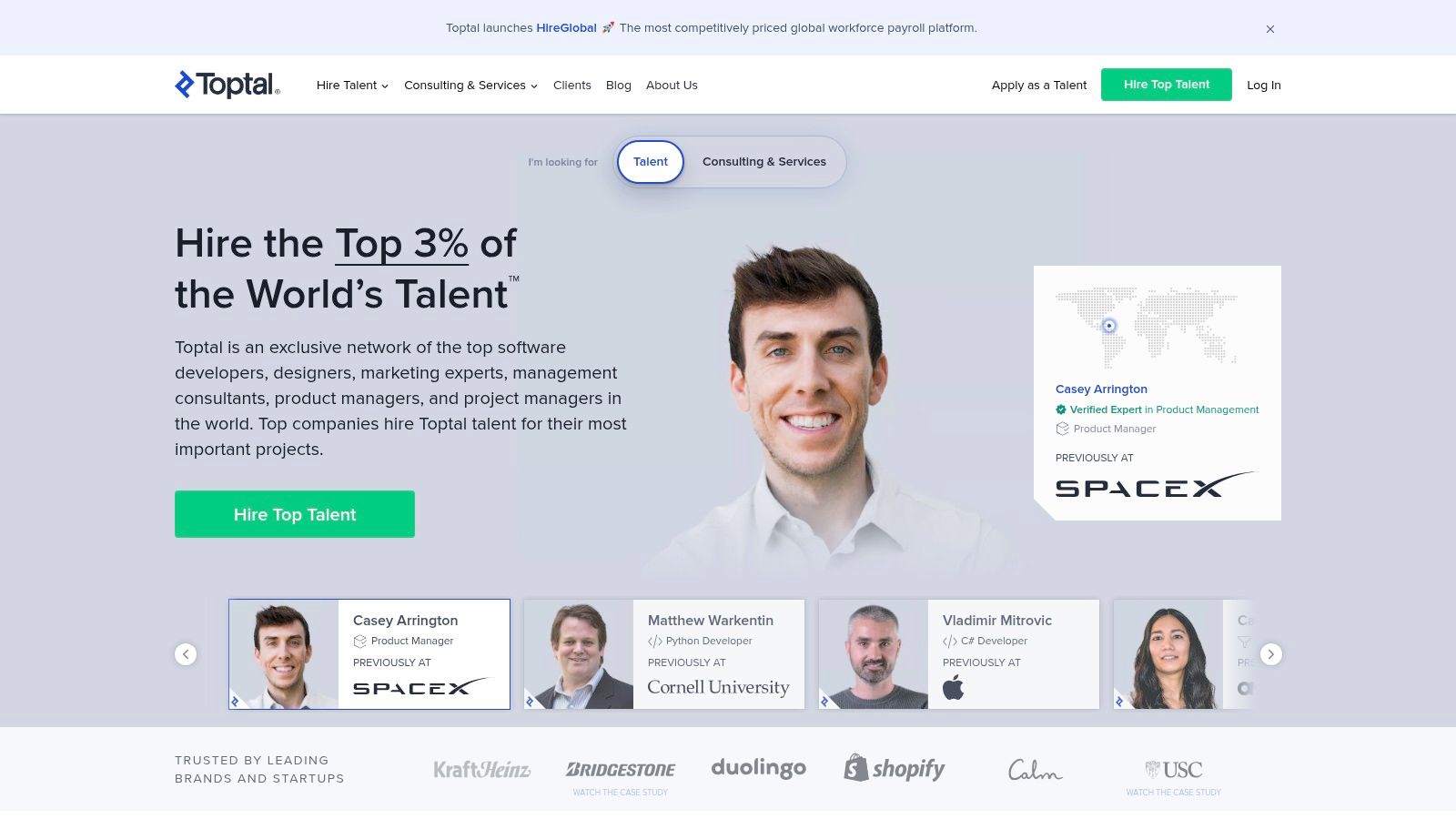
What sets Toptal apart is its rigorous, multi-stage screening process, which ensures only seasoned professionals join the network. The platform offers a rapid matching service, typically connecting clients with suitable candidates within 48 hours. This efficiency, combined with a no-risk trial period, allows businesses to integrate high-caliber talent into their teams quickly and confidently, whether for individual roles or entire managed project teams.
Key Considerations
- Best For: Companies needing to hire senior-level, specialized talent for strategic roles or complex, high-stakes projects without a lengthy recruitment cycle.
- Pricing Model: Toptal requires an initial deposit (often $500) that is applied to the first invoice. Pricing is premium and varies by engagement, but it is typically higher than open marketplaces.
- Vetting Tip: While Toptal's screening is extensive, prepare detailed project briefs and conduct your own in-depth interviews. Focus on how the candidate's specific experience aligns with your project's unique challenges and company culture to ensure a perfect fit beyond just technical skills.
The platform is less suited for small, one-off tasks and is geared more toward businesses that view outsourcing as a strategic investment in top-tier expertise. Its hands-on matching approach significantly reduces the hiring burden on clients.
Website: https://www.toptal.com
5. Freelancer.com
Freelancer.com is one of the oldest and largest global marketplaces for diverse business outsourcing services. It connects millions of employers with freelancers specializing in fields ranging from software development and data entry to engineering and creative design. The platform supports a variety of engagement models, accommodating everything from small, fixed-price tasks to complex, long-term hourly projects, making it a flexible option for businesses of all sizes.
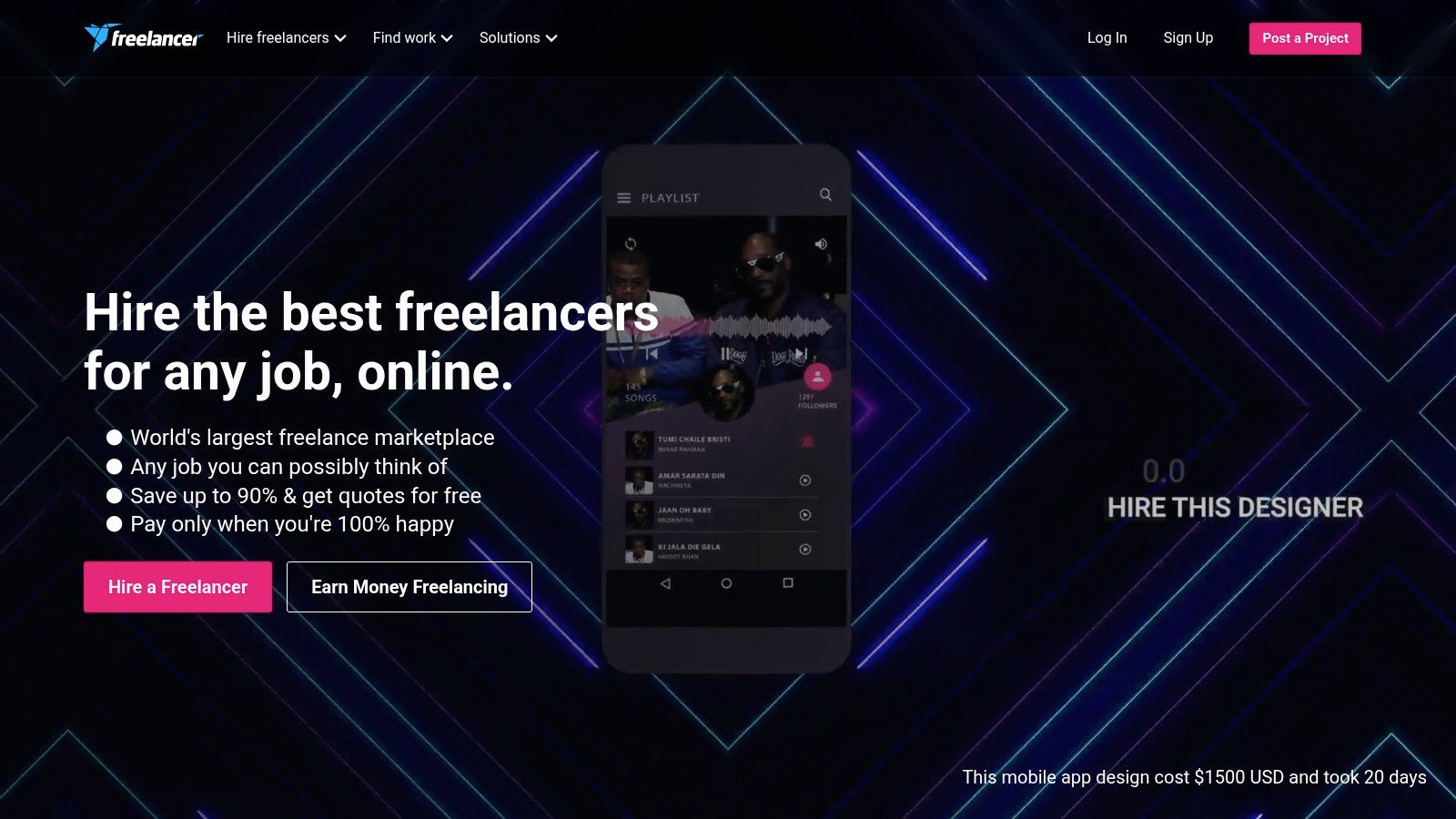
What makes Freelancer.com unique is its contest feature, which allows businesses to receive multiple creative concepts from various designers or writers before selecting a winner. This is particularly useful for projects like logo design or branding where exploring multiple ideas is beneficial. The platform also has a structured milestone payment system that ensures funds are only released upon the satisfactory completion of pre-defined project stages, adding a layer of security for both clients and freelancers.
Key Considerations
- Best For: Small to medium-sized businesses looking to source a wide range of creative options quickly through contests, or for projects with well-defined, short-term scopes.
- Pricing Model: Employers pay a low fixed fee (3% or $3, whichever is greater) for projects. Freelancers are charged a percentage-based project fee. Optional upgrades for job postings are available for an extra cost.
- Vetting Tip: The sheer volume of freelancers can make vetting a challenge. Pay close attention to a freelancer's portfolio, completion rate, and reviews from past clients. Utilizing the platform's Preferred Freelancer Program can help connect you with top-tier, pre-vetted talent.
While the bidding system can be competitive and drive costs down, quality varies widely. Investing time in a thorough screening process, including skills tests and interviews, is essential to securing a successful outsourcing outcome on this platform.
Website: https://www.freelancer.com
6. Guru
Guru is a freelance marketplace that provides a reliable platform for a variety of business outsourcing services, with a strong focus on professional fields like programming, finance, and design. It is particularly known for its transparent fee structure and secure payment system, making it an attractive option for companies that prioritize cost-effectiveness and financial security in their outsourcing partnerships.
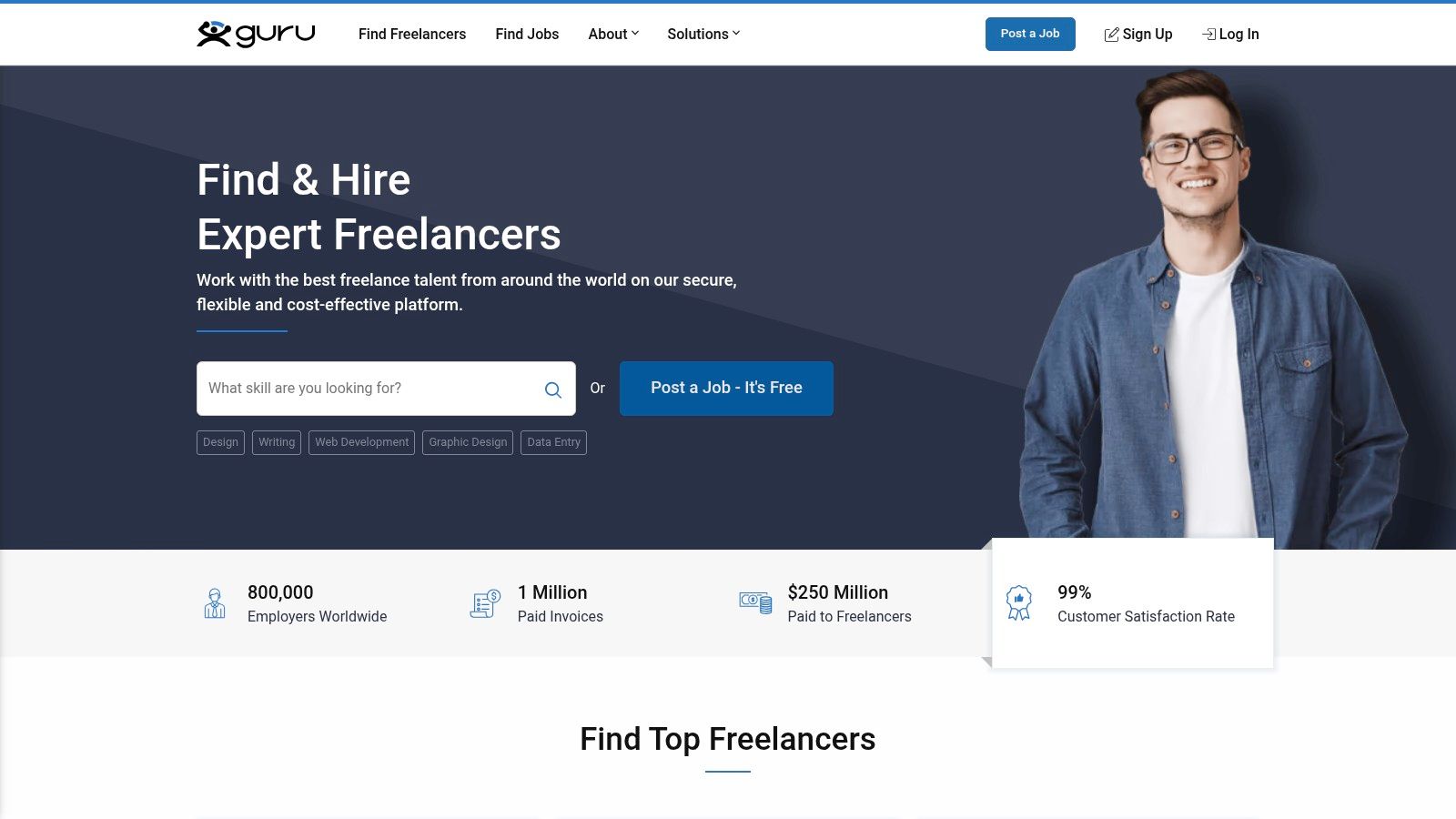
The platform's standout feature is SafePay, an escrow system that holds funds until project milestones are approved by the client, minimizing financial risk for both parties. Guru also offers dedicated "WorkRooms" for each project, which centralize communication, file sharing, and project management tasks. This helps keep collaborations organized and on track. The platform supports multiple agreement types, including hourly, fixed-price, task-based, and recurring payment contracts, providing flexibility for diverse project needs.
Key Considerations
- Best For: Small to mid-sized businesses looking for skilled professionals in technical, creative, or administrative fields with predictable, low transaction costs.
- Pricing Model: Freelancers set their rates. Guru charges employers a very competitive handling fee of 2.9%, with potential cashback options that can reduce it to nearly zero.
- Vetting Tip: While Guru's talent pool is smaller than larger platforms, focus on freelancers with extensive work portfolios and positive feedback within the WorkRoom system. The platform's emphasis on long-term relationships means repeat client reviews are a strong indicator of reliability and quality.
Website: https://www.guru.com
7. Clutch
Clutch is a B2B ratings and reviews platform that serves as a powerful directory for companies seeking vetted business outsourcing services. Unlike freelance marketplaces, it focuses on connecting businesses with established agencies and firms specializing in areas like IT services, marketing, software development, and B2O solutions. It provides a structured environment for comparing providers based on real client feedback and in-depth company profiles.
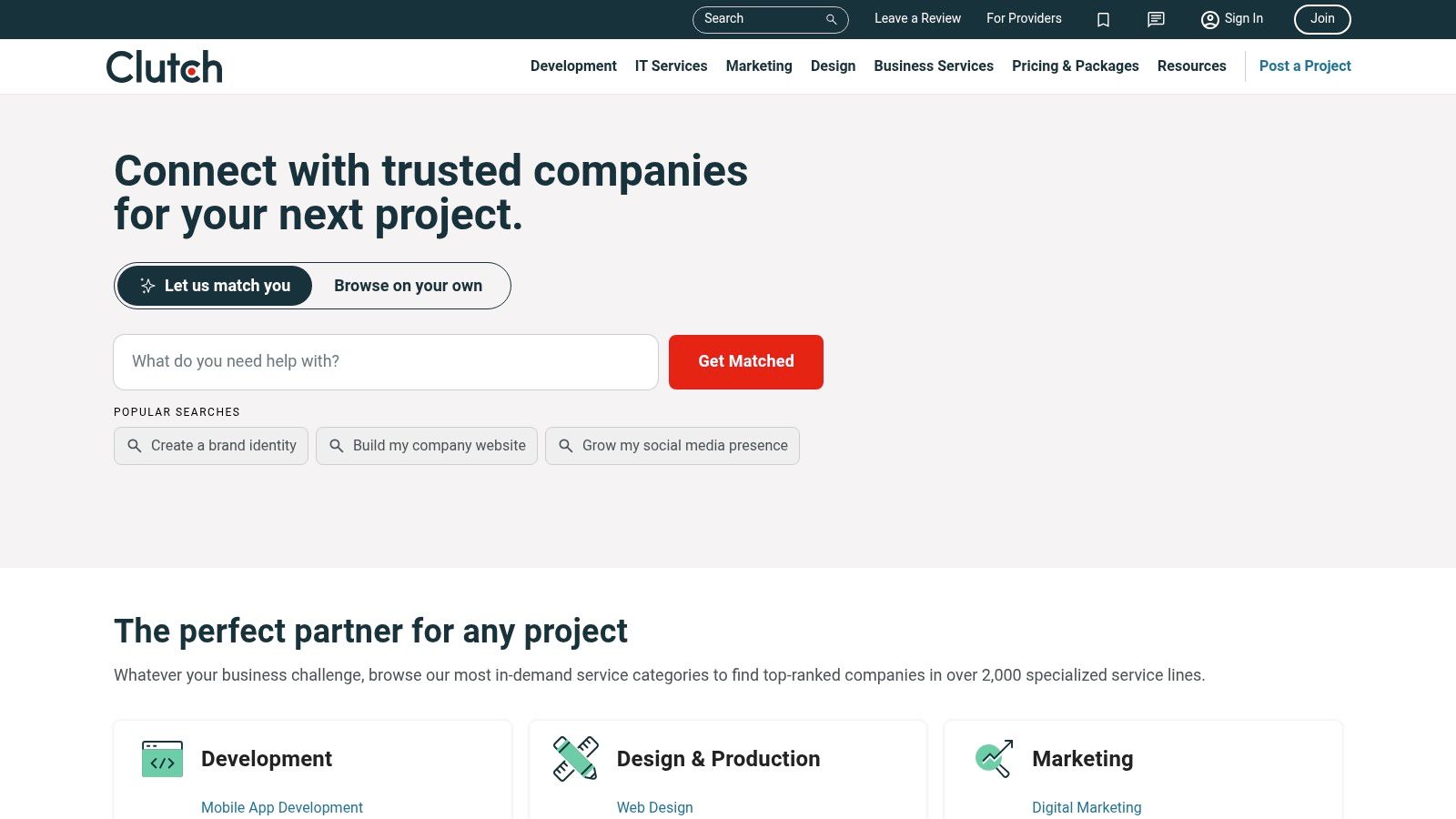
What sets Clutch apart is its rigorous verification process for client reviews. Analysts often conduct live interviews with a vendor's past clients to gather authentic, detailed feedback on project management, quality, and results. This high-quality due diligence is presented in a standardized format, allowing businesses to perform thorough, side-by-side comparisons of potential outsourcing partners. The platform’s advanced filters for location, budget, and industry focus make it highly efficient for sourcing specialized firms.
Key Considerations
- Best For: Small to large businesses looking to hire established B2B firms or agencies for substantial, long-term projects rather than individual freelancers.
- Pricing Model: Free for businesses to browse and contact vendors. The agencies listed pay for premium placements and features. All contracts and payments are handled directly between the client and the chosen vendor off-platform.
- Vetting Tip: Pay close attention to the "Verified" reviews and read the full case study-style feedback. While Clutch provides excellent data, always conduct your own final interviews and reference checks before signing a contract with a listed firm.
Clutch excels at the discovery and initial vetting stages of outsourcing. By providing transparent, client-verified information, it reduces the risk and time investment required to find a reliable long-term partner for critical business functions, from finance operations to customer support.
Website: https://clutch.co
8. TaskUs
TaskUs is a specialized managed outsourcing provider that partners with high-growth technology companies to deliver advanced business outsourcing services. The company excels in providing digital customer experience (CX), content moderation and trust & safety, and critical AI data solutions. It moves beyond traditional BPO by integrating proprietary AI tools into its operations to enhance agent performance and service quality.
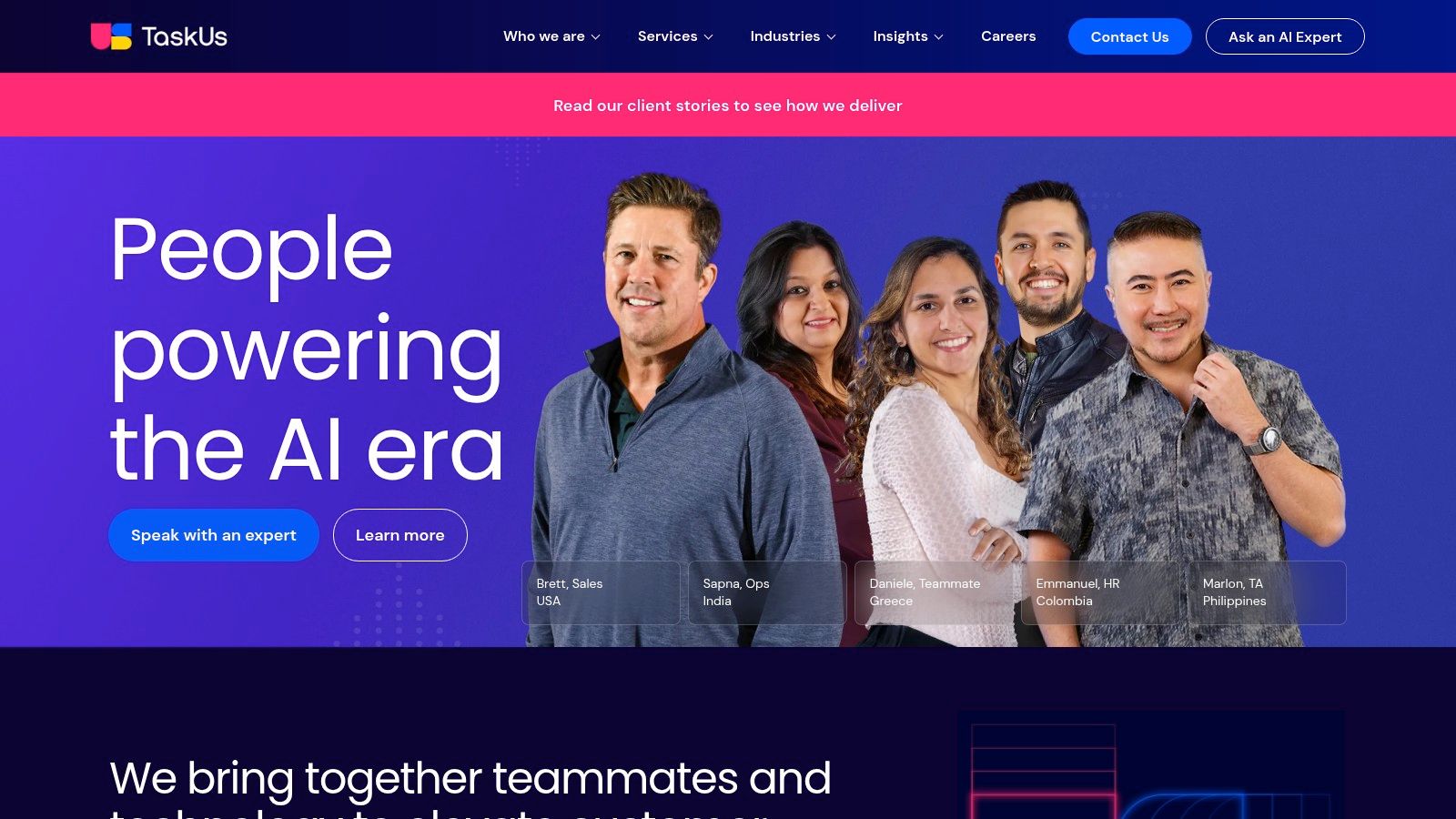
What sets TaskUs apart is its focus on serving disruptive, digital-first brands and its significant investment in AI-augmented services. Tools like AssistAI and TaskGPT are used to boost agent productivity and provide deeper insights from customer interactions. This tech-forward approach makes it a strong partner for companies looking to build scalable, efficient, and intelligent support and data operations from the ground up.
Key Considerations
- Best For: Fast-growing tech startups and established enterprises that need a high-touch, managed partner for digital CX, trust and safety, or complex AI data annotation.
- Pricing Model: Enterprise-focused, custom pricing based on the scope, scale, and specific service requirements. A direct sales engagement is required to get a quote.
- Vetting Tip: TaskUs is a premium, managed provider, so the vetting is mutual. Be prepared to discuss your long-term strategic goals, required service levels, and expected team size to ensure a good fit, as they typically require minimum volume commitments.
For companies aiming to integrate such services seamlessly, exploring strategies around business process automation with Zilo Services can provide a framework for maximizing the value of an outsourcing partnership. TaskUs is ideal for organizations that view their service partner as an extension of their own team.
Website: https://www.taskus.com
9. SupportNinja
SupportNinja is a US-based provider offering specialized business outsourcing services focused on customer support, content moderation, and technical back-office roles. The company helps businesses build and manage dedicated remote teams, allowing them to scale operations efficiently without the overhead of direct hiring. Their model is designed for companies that need high-quality, integrated teams to handle essential but non-core functions.
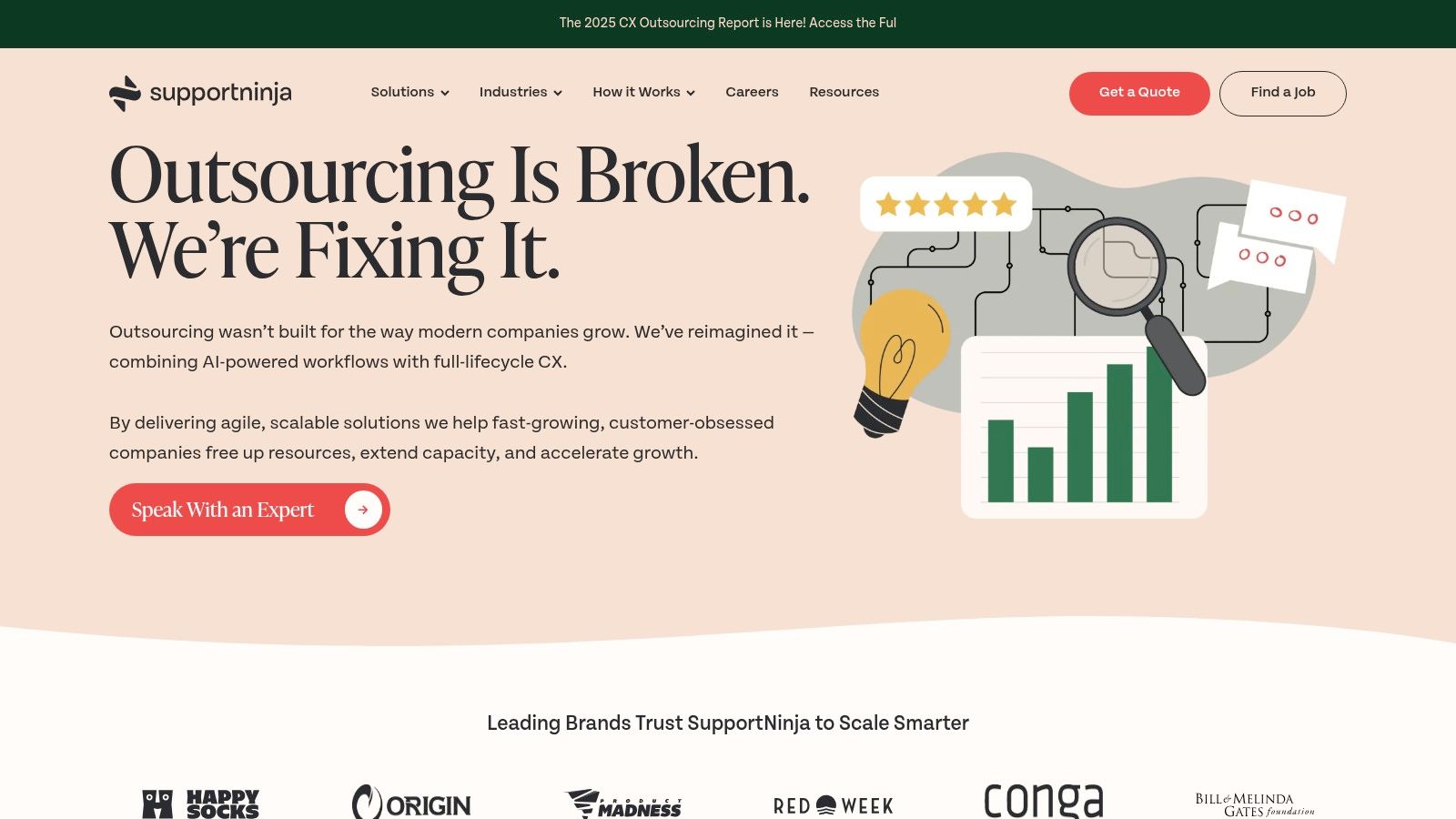
What sets SupportNinja apart is its flexible engagement framework, which includes both a “Talent-as-a-Service” model where clients self-manage their teams and a fully managed “Management-as-a-Service” option. Under the managed model, SupportNinja handles everything from recruitment and custom onboarding to payroll, quality assurance, and IT support. This dual approach allows startups to start lean and enterprises to delegate entire operational departments.
Key Considerations
- Best For: Fast-growing startups and tech companies needing to quickly scale customer experience, e-commerce operations, or content moderation teams.
- Pricing Model: Pricing is entirely quote-based and varies with the specific services, team size, and management level required. There is no public pricing available.
- Vetting Tip: The best results are typically seen when outsourcing a team of at least a few agents, as the model is built for scale. During the sales process, be very specific about the KPIs and reporting dashboards you require to ensure their management structure aligns with your performance goals.
SupportNinja’s strength lies in creating dedicated, cohesive teams that feel like an extension of your own company, making it a strong choice for businesses prioritizing brand consistency and customer satisfaction in their outsourced functions.
Website: https://www.supportninja.com
10. Helpware
Helpware is a modern business process outsourcing (BPO) provider that specializes in building dedicated, managed teams for companies. Their approach to business outsourcing services centers on creating an integrated extension of your own operations, focusing on areas like customer support, technical assistance, content moderation, and various back-office tasks such as data annotation. They offer a structured, scalable model that helps brands rapidly deploy skilled teams aligned with their culture and goals.
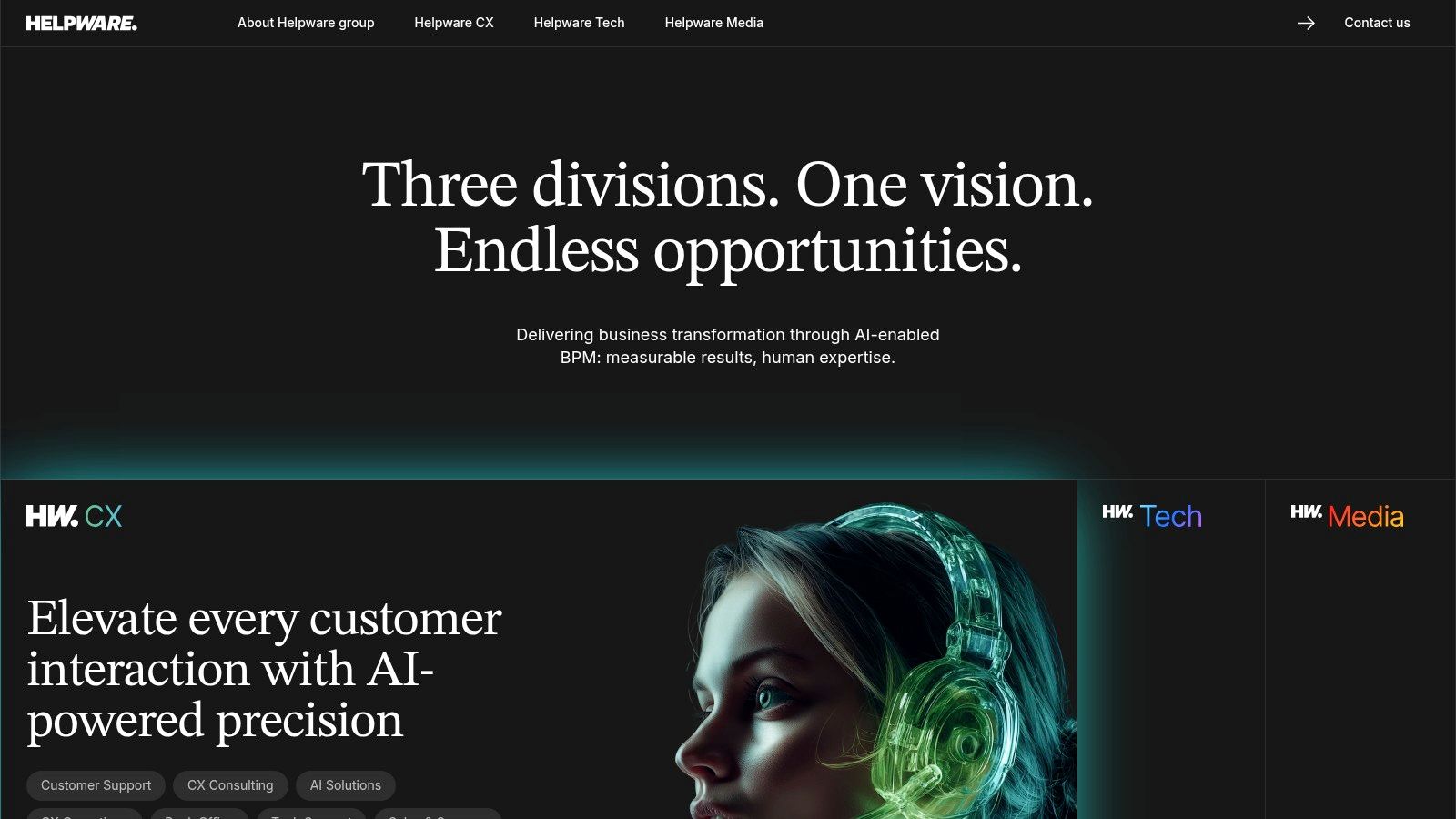
What makes Helpware stand out is its tiered program structure, which allows businesses to start with a small team of dedicated agents and scale up as needed. Unlike freelance marketplaces, Helpware provides an optional management layer, including team leadership and quality assurance, ensuring performance and alignment without requiring direct oversight from the client. This managed service model is ideal for companies that need a reliable, high-touch support function but lack the internal resources to build it from scratch.
Key Considerations
- Best For: Growing startups and established companies that need a dedicated, managed team for customer experience, technical support, or complex back-office functions.
- Pricing Model: Offers both hourly rates and subscription-based tiers. Pricing is customized and requires direct contact for a quote, as public rates are not listed.
- Vetting Tip: During the sales and onboarding process, be very specific about the cultural fit and technical skills you require. Ask for case studies or references from clients in a similar industry to gauge their expertise and performance management style.
For businesses looking into highly specialized tasks like data labeling for AI, providers like Helpware offer a managed alternative to direct hiring. Similarly, you can find other specialized providers when exploring the top companies for Automated Speech Recognition (ASR) services for different operational needs. The minimum team size at Helpware might be a consideration for very small businesses.
Website: https://www.helpware.com
11. Teleperformance (US)
Teleperformance is an enterprise-grade outsourcing provider specializing in high-volume, omnichannel customer experience management. It's a go-to partner for large corporations seeking advanced business outsourcing services that combine human talent with intelligent automation. Their offerings extend beyond traditional call centers to include analytics, content moderation, and full back-office support, all managed from a network of US, nearshore, and offshore delivery sites.
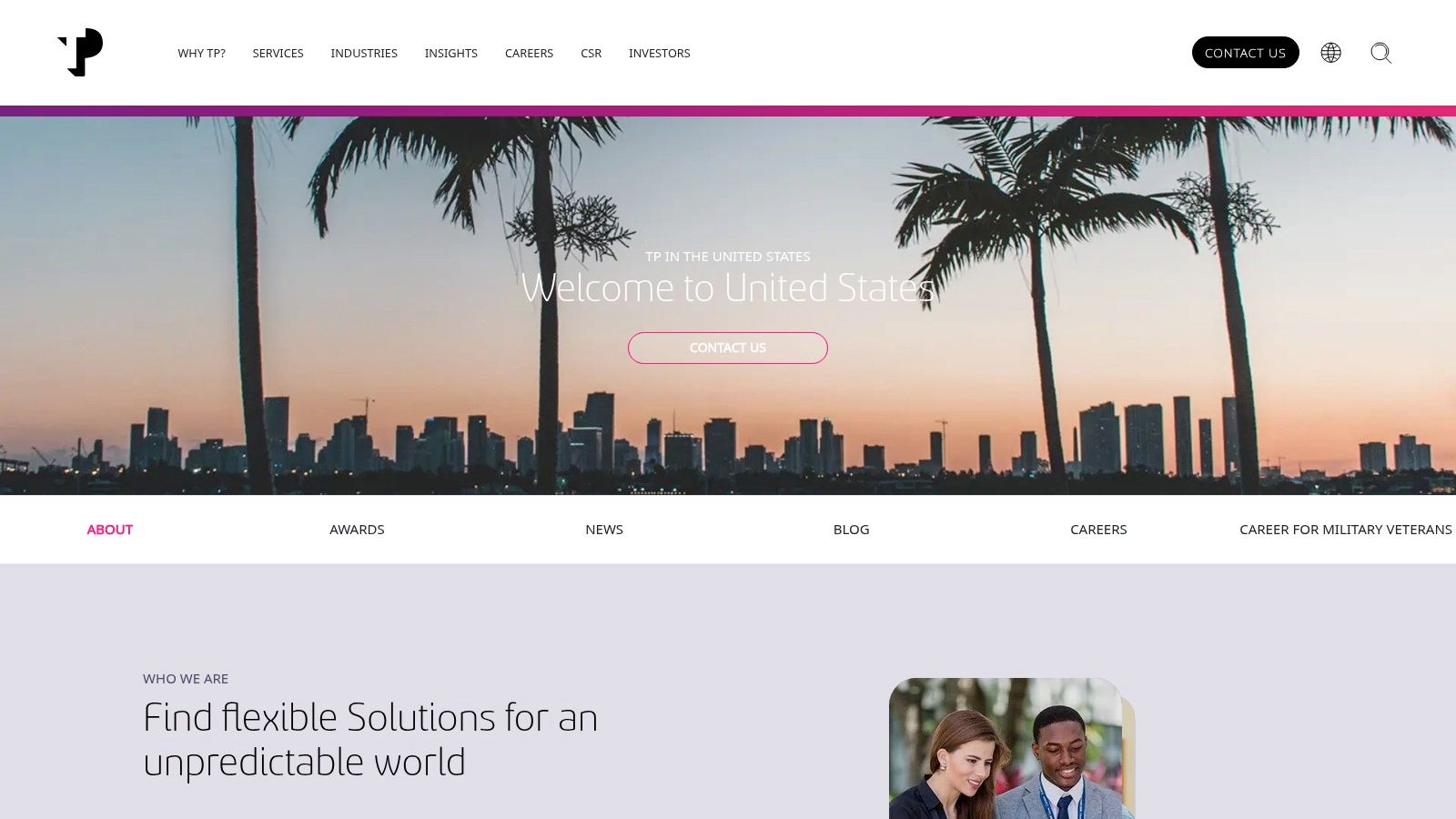
What distinguishes Teleperformance is its immense scale and deep focus on compliance and security. The company integrates AI and machine learning into its customer experience (CX) workflows to optimize interactions and gather actionable insights from speech and text analytics. This technology-driven approach, combined with a massive global footprint, allows them to deliver consistent, secure, and highly customized solutions for complex industries like finance, healthcare, and technology.
Key Considerations
- Best For: Mid-market and enterprise-level companies requiring large-scale, compliant customer support, content safety, or back-office operations.
- Pricing Model: Custom enterprise pricing. Solutions are customized, so costs are determined after a consultation and sales cycle; no self-service or transparent pricing is available.
- Vetting Tip: As a high-touch provider, the engagement process is consultative. Prepare a detailed Request for Proposal (RFP) outlining your specific needs, volume projections, security requirements (e.g., PCI, HIPAA), and desired key performance indicators (KPIs) to get an accurate proposal.
Teleperformance is designed for businesses that have outgrown freelance platforms and need a fully managed, institutional partner for their outsourcing needs. The process involves direct engagement with their sales and solutions teams to architect a service delivery model that aligns with specific business objectives and regulatory constraints.
Website: https://www.teleperformance.com/en-us/locations/usa-site/usa
12. Catalant
Catalant serves as an elite marketplace for on-demand consulting, positioning itself as a strategic alternative to traditional consulting firms. It connects businesses with a network of over 100,000 vetted independent consultants and boutique advisory teams, specializing in complex operational, digital, finance, and transformation projects. This platform is ideal for companies seeking high-level expertise for specific business outsourcing services without the overhead of a large-scale consulting engagement.
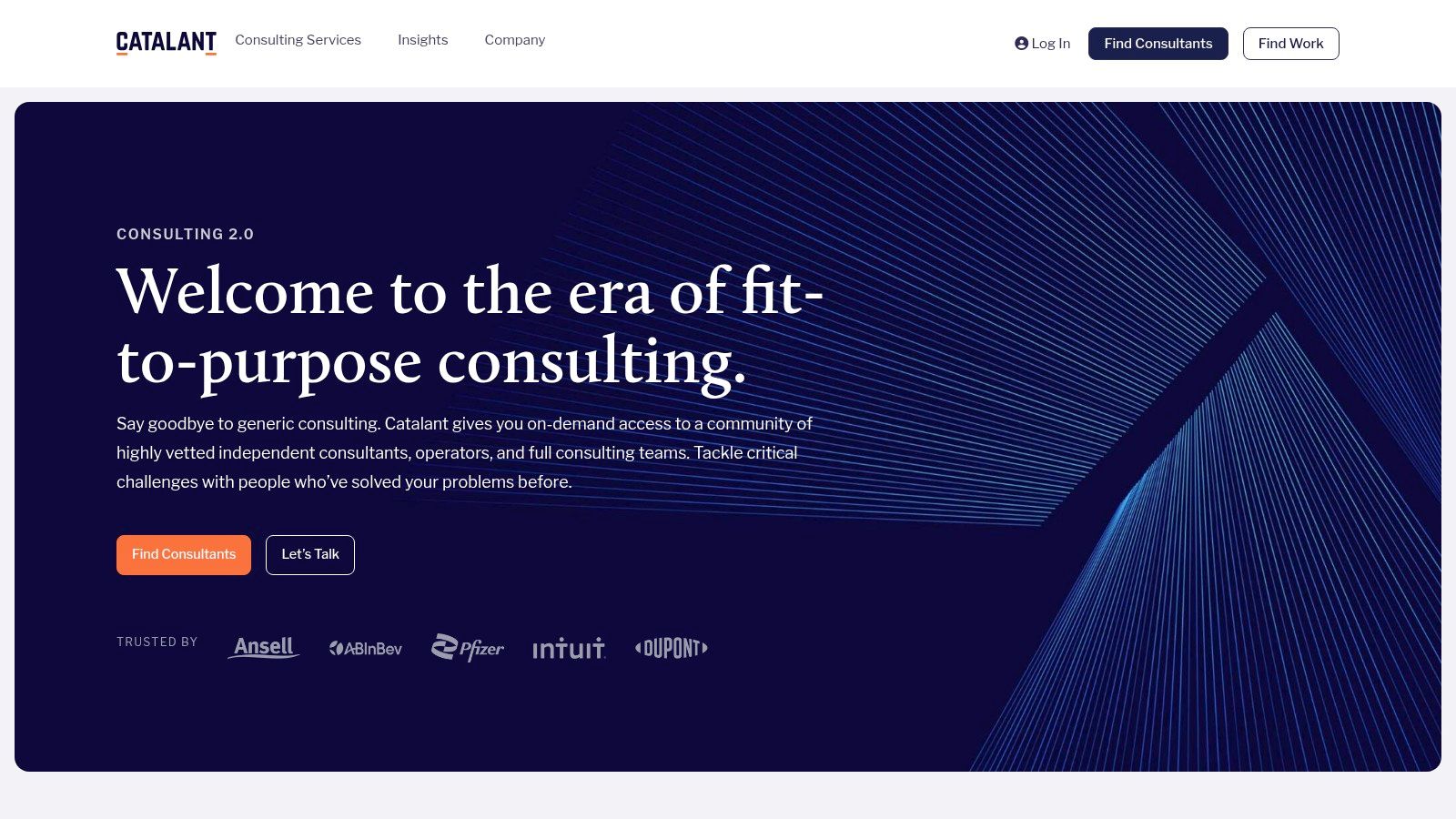
What distinguishes Catalant is its focus on enterprise-grade projects and senior-level talent, with consultants averaging over 19 years of experience. The platform streamlines the entire engagement process with guided workflows, integrated contracting, and comprehensive compliance support. This model allows organizations to quickly deploy highly skilled experts for critical initiatives like market entry analysis, supply chain optimization, or AI strategy development, offering a more flexible and targeted approach to problem-solving.
Key Considerations
- Best For: Enterprises needing to augment internal teams with specialized senior consultants for high-impact strategic projects.
- Pricing Model: Pricing is proposal-based and varies significantly depending on the project scope and consultant's day rate.
- Vetting Tip: While Catalant vets its talent, clients should clearly define project scope and deliverables upfront. Use the platform's tools to review detailed consultant profiles and past project successes to ensure an exact match for your strategic needs.
Website: https://www.catalant.com
Business Outsourcing Services Comparison Chart
| Provider | Provider Type | Pricing Transparency | Onboarding Speed | Client Management Overhead | Best Use Case | Startup-Friendly Back-Office Support | IT Outsourcing Fit |
|---|---|---|---|---|---|---|---|
| 🏆 Zilo AI | Managed / consultative provider | Low upfront transparency; quote-based | Medium | Low to medium after setup | AI data work, multilingual operations, specialist manpower | Strong | Good for specialized AI/ops support |
| Upwork | Marketplace | High | Fast | High | Flexible hiring for admin, creative, and short-term technical work | Moderate | Good for project-based IT |
| Fiverr Pro | Marketplace | High on packaged work | Fast | Medium | Vetted creative, marketing, and scoped specialist tasks | Limited to moderate | Moderate for smaller scoped builds |
| Toptal | Curated talent network | Medium to low | Fast to medium | Medium | Senior engineering, finance, design, and strategic specialists | Limited | Strong for premium technical talent |
| Freelancer.com | Marketplace | Medium | Fast | High | Competitive bidding, short projects, creative contests | Limited | Moderate |
| Guru | Marketplace | Medium to high | Fast | High | Cost-conscious hiring for professional freelancers | Limited | Moderate |
| Clutch | Directory | Medium | Medium | Medium to high | Discovering agencies and firms before direct engagement | Moderate | Strong if you want agency comparison |
| TaskUs | Managed provider | Low upfront transparency | Medium | Low once live | Scaled CX, trust & safety, managed AI operations | Moderate | Moderate to strong for managed tech-adjacent ops |
| SupportNinja | Managed provider | Low upfront transparency | Medium | Low to medium | Dedicated support and back-office teams | Strong | Moderate |
| Helpware | Managed provider | Low upfront transparency | Medium | Low to medium | Dedicated teams for support and operational workflows | Strong | Moderate |
| Teleperformance | Managed provider | Low upfront transparency | Slower enterprise onboarding | Low after transition | Enterprise CX, compliant back-office, large-volume programs | Limited for very small startups | Moderate |
| Catalant | Marketplace / consulting network | Low to medium | Medium | Medium | High-level transformation, finance, and consulting work | Limited | Strong for advisory, not execution-heavy delivery |
If you are comparing the best business services providers 2025 by team maturity, the shortlist usually becomes clear. Startups needing admin or operational help should begin with Zilo AI, SupportNinja, or Helpware; teams wanting flexible specialists should compare Upwork, Fiverr Pro, and Toptal; enterprises with compliance-heavy volume should look first at TaskUs and Teleperformance; buyers still mapping the market can start with Clutch. For finance leaders reviewing accounting-specific support, we also recommend reading more from HireAccountants as a useful companion resource.
| Provider | Core Services & Features | User Experience & Quality ★ | Value & Pricing 💰 | Target Audience 👥 | Unique Selling Points ✨ |
|---|---|---|---|---|---|
| 🏆 Zilo AI | Manpower + AI data annotation (text, image, voice), translation, transcription | ★★★★★ Expert linguistic team, 10M+ data points, multilingual | Consultative pricing (custom quotes) | Startups, enterprises, AI teams, researchers | Multilingual AI-ready data, manpower across industries, end-to-end data prep |
| Upwork | Freelancer marketplace with broad skill set | ★★★★ Varies by freelancer, transparent work logs | Competitive via bidding, fees apply | SMEs, startups, general outsourcing | Huge talent pool, hourly & fixed pricing |
| Fiverr Pro | Vetted Pro freelancers for marketing, creative, data | ★★★★ Fast turnaround, vetted pros | Subscription tiers plus project fees | Businesses needing vetted specialist freelancers | Business tools, transparent pricing |
| Toptal | Elite vetted talent for engineering, design, finance | ★★★★★ High standards, trial-to-hire | Premium pricing, often opaque | Enterprises, strategic/complex projects | Access to top 3% talent, team-managed options |
| Freelancer.com | Large platform with contests, fixed & hourly projects | ★★★ Quality varies, contest model | Low employer fees, add-ons increase cost | SMEs, startups, creative & development projects | Creative contests, milestone payments |
| Guru | US-focused, SafePay escrow, multi-contract types | ★★★ Varies, smaller talent pool | Very low employer fees, cashback | Small to mid-size businesses | SafePay escrow, WorkRooms collaboration |
| Clutch | B2B directory for vetted outsourcing firms | ★★★★ Detailed reviews, vendor portfolios | Pricing ranges provided but indicative | Enterprises seeking reliable vendors | Verified reviews, direct vendor communication |
| TaskUs | Managed outsourcing, AI-driven customer experience | ★★★★ Deep tech expertise, AI tools | Enterprise engagement, quote-based | High-growth tech brands | AI-powered service tools, onsite & remote |
| SupportNinja | Flexible outsourcing, Talent-as-a-Service & Managed | ★★★ Flexible models, needs scale | Quote-based, no public rates | Startups to enterprises | Flexible team management models |
| Helpware | Managed BPO with dedicated teams & leadership | ★★★★ Scalable packaging | Contact for pricing, tiered subscriptions | Brands needing managed support | Hourly & subscription billing, leadership options |
| Teleperformance | Enterprise omnichannel CX, analytics, automation | ★★★★ Large scale, compliance focused | Sales engagement, no instant pricing | Mid-market to enterprise | AI & ML automation, global delivery footprint |
| Catalant | On-demand vetted consultants for strategic projects | ★★★★ Senior expertise, guided workflows | Proposal-based, day rates | Enterprises, digital/AI & transformation projects | Large experienced talent network, compliance focus |
Making the Right Choice: Your Outsourcing Strategy Blueprint
Start with the operating model, not the vendor logo.
- Need admin help or startup back-office support fast? Shortlist managed team providers such as Zilo AI, SupportNinja, or Helpware.
- Need flexible specialists for short projects or narrow roles? Start with an outsource platform like Upwork, Fiverr Pro, or Toptal.
- Need enterprise compliance, scale, and formal SLAs? Focus on TaskUs or Teleperformance.
- Need annotated data, multilingual workflows, or AI-adjacent operations? Prioritize specialist providers over general marketplaces.
- Still researching agencies? Use Clutch to narrow the field before entering direct sales conversations.
That decision aid matters because “best” is contextual. A reliable outsourcing platform for one company can be the wrong choice for another if the management model is mismatched. In our review, the biggest mistake was not choosing the wrong provider but choosing the wrong provider category.
Build the scope before you compare prices
Write down the exact function you want outsourced, the weekly or monthly volume, systems involved, security sensitivity, and the success metrics that matter. Scope should include handoff steps, approvals, turnaround expectations, and escalation rules. If the work is operational, define who owns QA. If the work is technical, define acceptance criteria before you talk to vendors. Without that, every proposal looks comparable when it isn’t.
Ask for an SLA you can actually manage
A good service-level agreement should spell out deliverables, response times, error thresholds, reporting cadence, and remediation steps. For managed providers, ask who supervises the team and how issues are corrected. For marketplaces, ask yourself whether your own team can realistically create and enforce those standards. A cheap contract without clear ownership often produces the most expensive cleanup.
Evaluate security and compliance early
Security cannot be an afterthought if the workflow touches customer records, financial data, healthcare information, or internal systems. Ask where the work is performed, what access controls are used, how data is retained, and what audit trail exists. For larger organizations, those answers often determine whether a vendor is viable before pricing even matters. Procurement expectations are also rising in AI- and infrastructure-led markets, a shift reflected in broader business rankings such as TIME and Statista’s 2025 list, where scale and operational strength increasingly shape buyer expectations.
Design a pilot before a long contract
For most outsourcing relationships, a pilot is the safest way to test fit. Keep it narrow enough to measure but real enough to expose process issues. A good pilot defines timeline, sample volume, quality targets, communication cadence, and a formal review point. What stood out to us was that the strongest providers were usually comfortable being measured clearly; weak ones stayed vague on accountability.
How to evaluate outsourced back-office services for startups scaling fast
Startups should ask five questions before signing: How long does ramp-up take? Who trains new team members? What QA checks happen before work is considered complete? How are performance issues corrected? How quickly can the provider add headcount if volume spikes? These questions matter more than polished sales decks because startup pain usually comes from uneven execution, not lack of vendor availability.
For founders, the best platforms for admin and back-office outsourcing 2025 2026 are often the ones that remove management burden, not just labor cost. If your internal team is already stretched, choose a provider that documents training, owns supervision, and reports on output quality. If you have an operations manager who can run freelancers tightly, a marketplace may still be the more efficient choice.
Actionable next steps
- Define the work clearly: document tasks, tools, data sensitivity, and expected outputs.
- Choose the right provider category: marketplace, directory, or managed provider.
- Shortlist three options: compare them on onboarding, oversight, and pricing realism.
- Run a paid pilot: test quality, communication, and ramp speed before scaling.
- Review contract terms carefully: include SLA, confidentiality, reporting, and exit terms.
- Understand the contractor side too: resources on how professionals secure contract work can help you write clearer briefs and attract stronger candidates on marketplace-based platforms.
Frequently Asked Questions
What is the difference between an outsourcing platform and a managed provider?
An outsourcing platform usually gives you access to talent and basic workflow tools, but your team still handles hiring, supervision, and quality control. A managed provider recruits, trains, monitors, and reports on delivery for you. If the work is repetitive, high-volume, or compliance-sensitive, managed service is often the safer model.
Which options are best for startups that need back-office support?
Startups usually do best with providers that can supply dedicated support without requiring the founder to manage every task personally. In this list, Zilo AI, SupportNinja, and Helpware are the strongest starting points for teams that want outsourced back-office services for startups scaling fast.
Are marketplaces like Upwork good for IT outsourcing?
Yes, for the right kind of IT work. Upwork and Toptal can be excellent for project-based development, QA, integrations, DevOps help, or specialist troubleshooting. They are less ideal for heavily regulated, always-on, or large managed operations where SLAs, team continuity, and compliance matter more than speed to hire.
How do I judge whether a provider is reliable?
Look past marketing claims and ask about ramp time, account management, QA process, reporting cadence, escalation paths, and client references in a similar industry. A reliable outsourcing platform or provider should be able to explain exactly how quality is maintained, not just promise good outcomes.
Should I choose the cheapest provider?
Usually not. Actual cost includes rework, management time, slower onboarding, and quality failures. The best outsourcing decision is the one that fits your process maturity and risk tolerance, even if the hourly rate looks higher.
What should be included in a first pilot project?
A solid pilot should define scope, volume, turnaround time, quality benchmarks, communication cadence, and a formal review date. Keep it narrow enough to manage, but realistic enough to test how the provider handles training, exceptions, and reporting.
Ready to accelerate your AI and machine learning initiatives with world-class data annotation? Zilo AI provides the high-quality, human-powered data services you need to build and train accurate models. Partner with our expert team to transform your raw data into a strategic asset by visiting Zilo AI to learn more.
| Feature Analysis | Strengths & Limitations |
|---|---|
| Service Specialization | Pro: Deep expertise in AI-centric data and manpower for tech, retail, BFSI, and healthcare sectors. |
| Data Annotation Quality | Pro: Over 10 million data points annotated by linguistic experts, ensuring high accuracy and cultural relevance. |
| Global Language Support | Pro: Supports over a dozen languages, including less common ones like Finnish and Hungarian, vital for diverse AI models. |
| Pricing Transparency | Con: Requires direct consultation for pricing, which can slow down initial budget planning. |
| Customer Support Access | Con: Support is limited to weekdays, potentially impacting projects with tight, weekend deadlines. |