connect@ziloservices.com

+91 7760402792

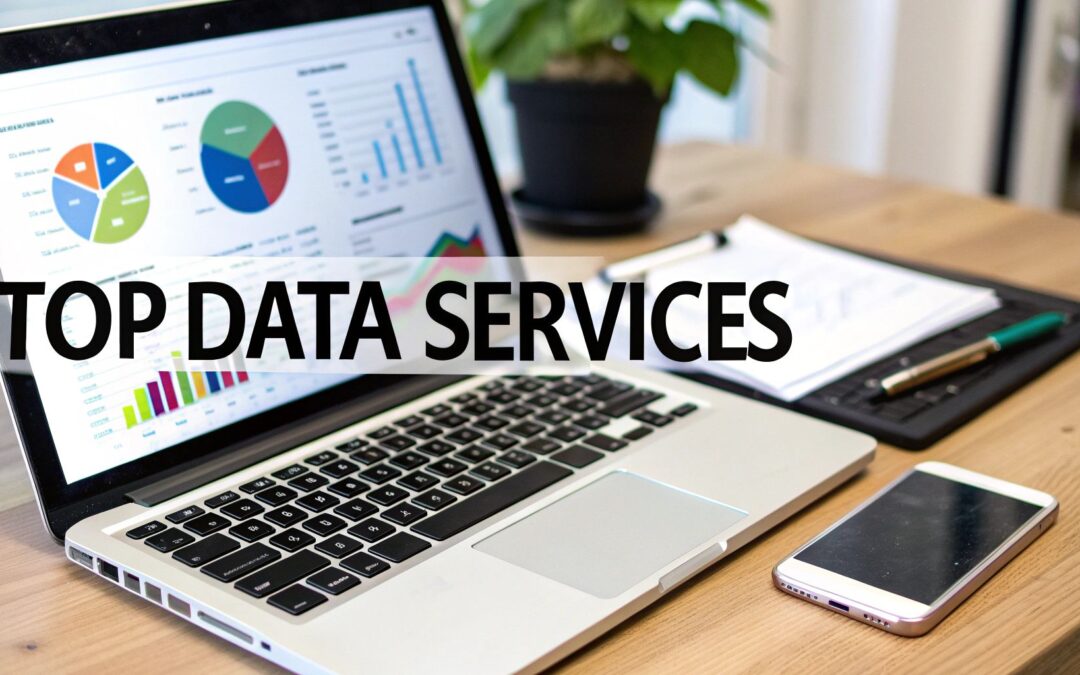
A laptop on a desk showing data analytics charts and graphs, representing data collection services.

Not all data collection providers solve the same problem. Some are built for AI training pipelines, some for survey sampling, some for recruiting verified professionals, and others for field teams capturing information offline. That distinction matters more in 2026 because buyers are balancing speed, compliance, and quality at the same time.

The category is also expanding quickly. Grand View Research estimates the data collection and labeling market reached USD 4.89 billion in 2025 and projects it to hit USD 17.10 billion by 2030, spanning image, video, text, and audio workflows across enterprise AI programs market forecast. In my editorial review, that growth shows up as a clear split between cheap self-serve tools and managed services that charge more but absorb the operational risk.

This guide compares 12 options across five practical use cases: managed AI annotation, survey sampling, participant recruitment, online capture, and enterprise-grade data operations. The goal is simple: help you choose a provider that matches the kind of data you need, the level of quality control required, and how much hands-on work your team can realistically take on.

How We Picked These Data Collection Services

I selected providers using six criteria that matter at purchase time, not just in feature lists.

  • Data quality controls: attention checks, QA layers, reviewer workflows, worker verification, and duplicate/fraud prevention.
  • Delivery model: self-serve platform, marketplace, recruitment layer, or fully managed service.
  • Fit by data type: survey responses, interview participants, image/text/audio annotation, mobile field records, or extracted web data.
  • Pricing transparency: whether you can estimate cost from public pricing/help documentation or need a custom quote.
  • Enterprise readiness: compliance support, managed QA, offline capture, multilingual capability, API access, or account management.
  • Practical scope: I excluded products that were really analytics tools, CRM forms, or one-feature scraping utilities that do not function as true data collection services.

I also favored vendors that clearly state who does the work. That sounds obvious, but many data collection companies blur the line between software and delivery. In practice, that difference determines whether your team is buying a tool to operate or a partner to manage the workflow for you.

One more editorial note: the easiest tools to launch are rarely the safest for high-stakes programs. If the project involves regulated data, multilingual annotation, participant authenticity, or contractual QA targets, I would generally lean toward a managed provider or an enterprise platform over the cheapest marketplace.

Quick Comparison: Top Data Collection Companies

If you need a fast shortlist, start here:

Service Best For Model Data Type Handled Pricing Best Team Size / Use Case Key Limitation
1. Zilo Managed AI & ML data Managed service Image, video, text, audio, transcription Custom quote Mid-market to enterprise teams needing managed QA and linguistic support Not built for instant self-serve consumer surveys
2. SurveyMonkey Audience General consumer surveys Self-serve panel Survey responses and panel sampling Public / pay per response Marketing, insights, and product teams running quick quant studies Niche audiences can get expensive
3. Prolific Academic & behavioral research Marketplace Survey, experiment, and research participants Public fee model Researchers and teams that care about participant quality and screening depth Limited fit for hard-to-source B2B roles
4. Amazon Mechanical Turk (MTurk) Micro-tasks & speed Crowdsourcing marketplace Simple labeling, moderation, categorization, task completion Public / per task Teams with strong internal ops that can design QA-heavy workflows Highest hands-on quality control burden
5. User Interviews Qualitative UX research Recruitment platform Interviews, usability tests, focus groups Mixed; public pay-as-you-go, custom plans UX and product research teams recruiting niche consumers or professionals Subscription pricing lacks full public transparency
6. Respondent B2B & professional recruitment Recruitment platform Verified professionals for surveys and interviews Public fee structure + incentives B2B research, pricing studies, and expert interviews Expensive for broad-volume sampling
7. Typeform Online form-based data capture Self-serve form platform Forms, lead capture, surveys, applications Public plans Small teams needing polished online data collection services You still need your own traffic or audience
8. KoboToolbox Field and mobile data collection Field/mobile platform Offline surveys, field records, monitoring data Public tiers NGOs, field teams, and research ops working in low-connectivity settings Less polished for commercial panel sampling
9. Bright Data Web data extraction Platform + managed options Public web datasets, scraping infrastructure, extraction Public + custom enterprise Data engineering teams collecting large-scale public web data Compliance and setup require specialist oversight
10. Qualtrics Enterprise survey programs Enterprise survey platform Surveys, experience data, panel management Custom quote Enterprise insights teams needing governance and workflow depth Overkill and overpriced for one-off small studies
11. Cint Global sample and panel access Panel marketplace Survey respondents across countries and target groups Custom / marketplace-based Agencies and insight teams buying survey sample at scale Quality varies by source and needs close monitoring
12. Appen Large-scale managed human data programs Managed service + platform AI training data, search relevance, speech, image, text Custom quote Enterprises running high-volume, QA-sensitive data programs Procurement cycle and minimums may not suit smaller teams

Takeaway: Zilo is the strongest fit here for managed AI training data, SurveyMonkey Audience is the quickest route for mainstream survey data collection, Respondent is the best pick when verified professionals matter more than raw volume, and MTurk remains the low-cost option for microtasks if your team can tolerate heavy quality policing.

Service Best For Model Key Strength
1. Zilo Managed AI & ML Data Managed Service End-to-end human annotation & linguistic expertise.
2. SurveyMonkey Consumer Surveys Self-Serve Massive global audience & ease of use.
3. Prolific Academic Research Marketplace High-quality, vetted participants.
4. MTurk Micro-Tasks Crowdsourcing Extremely low cost & high volume.
5. User Interviews UX Research Recruitment Finding niche professionals for 1-on-1s.
6. Respondent B2B Participants Recruitment High-end professional targeting (business owners, devs).

Choosing the Right Data Collection Solution for Your Use Case

A simple buying rule helps: choose based on who controls the workflow and what kind of errors would hurt you most.

  • If bad labels will damage a model, choose a managed provider with documented QA.
  • If you mainly need answers from a broad audience, use a survey panel.
  • If you need CFOs, developers, or healthcare admins, use a verified recruitment platform.
  • If your staff gathers information in the field, use a mobile/offline-first system.
  • If the project depends on public web records at scale, evaluate extraction infrastructure and legal review together.

For teams comparing data collection solutions side by side, the hidden cost is usually internal labor. A self-serve tool looks cheaper until someone has to write screeners, review fraud, clean exports, manage respondents, and rerun failed batches. In my view, that is why enterprise buyers often accept higher project pricing from a data collection firm or agency: they are paying to remove execution risk, not just to buy access.

Types of Data Collection Services: Which Do You Need?

The term covers several very different categories. Here is the practical framework I use when comparing providers.

Managed AI and annotation services

These providers collect, transcribe, or label image, video, text, and audio data for machine learning teams. They fit projects where accuracy, edge-case handling, multilingual support, or documented QA matter more than raw speed. Pricing is usually project-based or volume-based, with custom quotes tied to complexity, languages, and review requirements. The biggest risk is cost creep if guidelines change mid-project; avoid this route if your task is simple enough to run internally or through a low-cost marketplace.

Survey data collection companies

Survey data collection companies provide sample access, panel targeting, quota controls, and respondent delivery for quantitative research. They work best for concept tests, market sizing, brand studies, and fast-turn consumer feedback. Pricing is commonly per completed response, incidence-rate dependent, or packaged by audience difficulty. Quality risks include fraudulent respondents, poor incidence estimates, and weak panel source transparency; avoid them when you need observational or behavioral data rather than self-reported answers.

Participant recruitment platforms

These services recruit individuals for interviews, diary studies, focus groups, and professional surveys. They are especially useful when you need verified job titles, niche expertise, or scheduled 1-on-1 sessions instead of anonymous panel completes. Pricing typically combines participant incentives with a platform fee or service charge. The tradeoff is cost per recruit, so this is the wrong model for mass-volume commodity response collection.

Crowdsourcing marketplaces

A crowdsourcing marketplace gives you access to a large labor pool for repetitive tasks such as categorization, sentiment tagging, moderation, and simple validation. Pricing is usually per task, which makes the headline cost appealing. The operational risk is quality drift: you are responsible for task design, filters, audits, and worker management. Avoid this model if the project is regulated, multilingual, or too ambiguous to specify in short instructions.

Online data collection services for forms and panels

This category includes digital form builders, website embeds, and panel-linked survey tools that let teams capture information online without field staff. They fit lead intake, customer feedback, registration, claims intake, and lightweight market research. Pricing is usually subscription-based or tied to response volume. They are efficient, but they do not solve recruitment on their own unless a panel is bundled, so avoid them if you have no audience source.

Enterprise human data collection platforms for high-volume programs

These are human data collection platforms for enterprises that need governance, verification, secure workflows, large reviewer pools, and service-level accountability. They fit large-scale annotation, customer operations, global survey programs, and compliance-sensitive data gathering services. Pricing is usually custom and contract-based. The main risk is buying more platform than your team needs; avoid enterprise software if your project is short-term and narrow.

A quick distinction helps here. A data collection company may provide software, sample, labor, or managed delivery. A self-serve platform gives you tools and access, but your team runs the project. A data collection firm or data collection agency usually handles execution for you, including workforce management, quality checks, and delivery timelines. That difference often matters more than the brand name.

1. Zilo – Best for Managed AI Data Annotation

Website: ziloservices.com

Zilo positions itself as a premier, end-to-end managed partner for organizations needing high-quality, AI-ready datasets. Rather than offering a self-service platform, Zilo provides data collection services that combine skilled human expertise with advanced technology.

This white-glove approach is particularly valuable for complex machine learning projects where data accuracy and contextual nuance are paramount.

Key Offerings:

  • Comprehensive Data Annotation: Expertise across image, video, text, and audio data for a wide range of ML use cases.
  • Professional Transcription: High-accuracy audio and video transcription services essential for training voice recognition and NLP models.
  • Multilingual Support: A team of linguistic specialists delivers data services in multiple languages for global AI projects.

Pros:

  • End-to-end managed services cover image, text, and voice data.
  • “Human-in-the-loop” approach ensures higher accuracy than automated scrapers.
  • Ideal for teams without internal data ops resources.

Cons:

  • Service focus is primarily on annotation/transcription rather than simple market surveys.
  • Turnaround times may be longer than instant self-serve panels.

2. SurveyMonkey Audience – Best for General Consumer Surveys

Website: SurveyMonkey Audience

SurveyMonkey Audience is one of the most integrated data collection services for businesses that already use its parent survey platform. It provides a self-serve solution to purchase targeted survey responses directly from a global panel of consumers.

Key Features:

  • Targeting Precision: Filter respondents by country, age, gender, income, employment status, and even granular behavioral attributes.
  • Quota Management: Custom screening questions ensure your respondent pool meets specific criteria.
  • Express Delivery: Options available to expedite data collection for time-sensitive projects.

Pros:

  • Frictionless user experience; design and launch in one workflow.
  • Transparent pay-per-response pricing model.

Cons:

  • Cost per response can be high for niche audiences.
  • Data residency restrictions for some EU-provisioned accounts.

3. Prolific – Best for Academic & Behavioral Research

Website: Prolific

Prolific is a participant recruitment marketplace highly regarded for sourcing vetted, high-quality participants. It connects researchers with a diverse pool of active participants. Prolific is widely considered a strong option for academic data collection because of its emphasis on fair pay and data quality.

Key Features:

  • Granular Audience Filtering: Target participants using a large set of demographic and behavioral filters.
  • Representative Samples: Supports nationally representative sample options for the US and UK.
  • API Integrations: API support for connecting with other survey tools.

Pros:

  • Participants are often more attentive and engaged than on broader marketplaces.
  • No monthly subscription fees in its pay-as-you-go model.

Cons:

  • Platform fees can be higher than some competitors.
  • Sourcing highly niche B2B audiences can be challenging.

4. Amazon Mechanical Turk (MTurk) – Best for Micro-Tasks & Speed

Website: Amazon Mechanical Turk

Amazon Mechanical Turk (MTurk) is a crowdsourcing marketplace that enables businesses to access a scalable, on-demand workforce. It is designed for “Human Intelligence Tasks” (HITs)—micro-tasks that are difficult for computers but easy for humans.

Key Features:

  • Pay-Per-Task Model: You set the price for each unit of work.
  • Granular Task Management: Break projects down into thousands of individual assignments for massive parallel processing.
  • API Access: Programmatically create and manage HITs.

Pros:

  • Unparalleled speed and scalability.
  • Extremely low cost for simple tasks.

Cons:

  • Data Quality Risks: Requires heavy vetting and attention checks to filter out bots or bad actors.
  • Worker pool limitations can affect some targeting needs.

5. User Interviews – Best for Qualitative UX Research

Website: User Interviews

User Interviews specializes in recruiting participants for qualitative research, such as 1-on-1 interviews, usability tests, and focus groups. If your data collection strategy involves talking to people directly rather than sending a form, this is a leading option.

Key Features:

  • Advanced Screening: Build custom screeners to find highly targeted consumer or B2B professionals.
  • Integrated Logistics: Handles scheduling, messaging, and incentive distribution automatically.
  • Research Hub: Manage your own panel of users alongside their recruited panel.

Pros:

  • Streamlines the painful logistics of scheduling interviews.
  • Access to a large participant marketplace.

Cons:

  • Pay-as-you-go model can be expensive for B2B recruits.
  • Subscription pricing is not fully public.

6. Respondent – Best for B2B & Professional Recruitment

Website: Respondent

Respondent is a specialized recruitment platform that shines when you need professional data. If you need to survey software engineers, enterprise executives, or small business owners, Respondent has a verification system that validates their employment using work emails.

Key Features:

  • Verified B2B Participants: Uses LinkedIn and work email verification to help ensure participants are who they say they are.
  • Transparent Pricing: You pay a service fee on top of the incentive you offer the participant.

Pros:

  • High-quality access to hard-to-reach professionals.
  • Excellent for industry-specific market research.

Cons:

  • Significantly more expensive than consumer panels.

Respondent beats Prolific when job-title accuracy matters more than broad behavioral sampling. If I needed startup founders, cloud architects, or procurement leads, I would trust Respondent’s professional verification approach more than a general research marketplace. It also has an edge over User Interviews when the study is less about moderated UX conversations and more about recruiting verified professionals for surveys, pricing studies, or expert screening.

The tradeoff is cost and volume. Prolific is usually a better fit for academic-style designs and more standardized participant pools, while User Interviews is stronger for managed scheduling and qualitative logistics. Respondent sits in the middle as a premium option for B2B recruiting where one bad participant can invalidate the study.

7. Typeform – Best for Online Form-Based Data Capture

Website: Typeform

Typeform is not a panel company or a managed service; it is an online capture tool for teams that need to collect structured information through forms, applications, registrations, and lightweight surveys. That makes it useful for businesses running their own audience acquisition or customer feedback workflows rather than buying respondents from a marketplace.

What it collects and who runs it: Typeform collects self-submitted online form and survey data. Your team owns the workflow—design, traffic, targeting, and response cleaning—while the platform handles the front-end experience and integrations.

Key Features:

  • Conversational form builder with conditional logic.
  • Embedded forms and landing-page style flows for web collection.
  • Integrations with CRM, spreadsheets, and automation tools.

Pros:

  • One of the easiest online data collection services to launch quickly.
  • Strong completion experience for lead capture and feedback forms.

Cons:

  • No built-in respondent marketplace for hard-to-reach audiences.
  • Quality depends entirely on your traffic source and validation setup.

For teams that need a starting point, VeeForm's page can speed up setup before you customize fields, consent language, and routing logic.

8. KoboToolbox – Best for Field & Mobile Data Collection

Website: KoboToolbox

KoboToolbox is built for field teams collecting records through mobile devices, especially in low-connectivity environments. It is widely used in humanitarian, public sector, and research contexts where staff gather responses offline and sync later.

What it collects and who runs it: KoboToolbox captures survey responses, field observations, case records, and geotagged mobile entries. The workflow is operated by your field staff or partner teams, not by a recruited external panel.

Key Features:

  • Offline-first mobile forms and submissions.
  • Skip logic, validation rules, and geolocation support.
  • Dashboards and exports for field monitoring.

Pros:

  • Excellent fit for distributed fieldwork and enumerator-led studies.
  • Better than generic form tools when internet reliability is inconsistent.

Cons:

  • Not intended for buying online sample or B2B respondents.
  • Requires process discipline in training enumerators and supervising submissions.

This is the kind of platform I would choose for operational field data, not polished brand research. The quality upside comes from offline reliability; the downside is that you still need strong supervision to avoid bad entries from rushed field teams.

9. Bright Data – Best for Web Data Extraction at Scale

Website: Bright Data

Bright Data sits in a different part of the market: web data extraction rather than surveys or human participant recruitment. It is suited to teams gathering public web information for competitive monitoring, pricing intelligence, listings, and large-scale structured datasets.

What it collects and who runs it: The platform helps teams collect public web data through scraping infrastructure, datasets, and extraction tools. Depending on the plan, your internal data team may run the workflow, or Bright Data may support parts of delivery.

Key Features:

  • Proxy and scraping infrastructure for large-scale collection.
  • Prebuilt datasets and scraping APIs.
  • Enterprise compliance and support options for larger programs.

Pros:

  • Strong option when the project depends on public web scale, not surveys.
  • More enterprise-ready than ad hoc scraping scripts.

Cons:

  • Requires technical and legal review before deployment.
  • Cost can rise quickly with volume and managed support.

This is also where buyers need the most caution. Web data extraction can be legitimate, but only when the source, permissions, terms, and jurisdiction are reviewed carefully. As a rule, I would not treat scraping infrastructure as interchangeable with a survey platform or a managed data collection agency—they solve very different problems.

10. Qualtrics – Best for Enterprise Survey Programs

Website: Qualtrics

Qualtrics is an enterprise survey and experience management platform used by large organizations that need governance, advanced logic, workflow orchestration, and integration depth. It is a better fit for ongoing research operations than for one-off simple polls.

What it collects and who runs it: Qualtrics collects survey and experience data, often across customer, employee, or market research programs. Your team typically designs and manages the studies, although agencies may also run projects on top of it.

Key Features:

  • Advanced survey logic and workflow automation.
  • Enterprise user controls, permissions, and integrations.
  • Broader experience management ecosystem.

Pros:

  • Strongest fit here for mature enterprise survey operations.
  • Better governance and process control than lightweight tools.

Cons:

  • Pricing is custom and often too high for small teams.
  • More platform than most one-off research projects need.

When organizations ask for enterprise-grade online data collection services, this is closer to what they usually mean: not just sending a survey, but managing approval flows, permissions, dashboards, and downstream systems at scale.

11. Cint – Best for Global Survey Sample & Panel Access

Website: Cint

Cint is a sample marketplace and panel access provider used by research teams and agencies that need survey respondents across multiple countries and target groups. It is especially relevant when audience reach matters more than owning the survey software itself.

What it collects and who runs it: Cint provides access to respondents for surveys; your team or research partner generally controls the questionnaire and fielding logic, while Cint supplies sample and targeting.

Key Features:

  • Global sample marketplace with broad audience reach.
  • Targeting options for demographic and market research use cases.
  • Integrations for survey ecosystem workflows.

Pros:

  • Strong option for scaling international survey fieldwork.
  • Useful for agencies that need flexible sample supply across studies.

Cons:

  • Sample quality can vary by source and geography.
  • Requires active monitoring of incidence, fraud checks, and quotas.

Compared with SurveyMonkey Audience, Cint is more of a professional sample infrastructure play than an all-in-one beginner tool. That gives experienced research teams more flexibility, but it also puts more responsibility on them to monitor source quality.

12. Appen – Best for Enterprise-Scale Managed Data Programs

Website: Appen

Appen is a long-established managed provider for large-scale human data collection and annotation programs, especially in AI and search relevance use cases. It is aimed at enterprises that need workforce scale, multilingual capability, and formal program structures.

What it collects and who runs it: Appen supports collection and annotation of text, image, speech, search relevance, and other AI training datasets. The workflow is typically managed through Appen’s workforce and delivery model, with enterprise clients defining the objectives and acceptance criteria.

Key Features:

  • Large contributor network for high-volume human tasks.
  • Support for multilingual and multi-format AI datasets.
  • Managed delivery options for complex annotation programs.

Pros:

  • Broad enterprise capability across many AI data types.
  • More structured than using a pure marketplace for large programs.

Cons:

  • Less attractive for small, fast-moving teams with modest budgets.
  • Procurement, scoping, and oversight can be heavier than lighter-weight alternatives.

The cost-versus-quality tradeoff is clear here. Managed service models like Appen and Zilo are rarely the cheapest line item, but they can be the cheapest operational choice once you factor in QA overhead, failed batches, and internal staffing.

Frequently Asked Questions (FAQ)

What is a data collection service?

A data collection service is a company or platform that gathers information on your behalf or gives you the tools to gather it yourself. That can mean recruiting survey respondents, collecting online form submissions, managing field records, extracting public web data, or running human-in-the-loop annotation for AI systems. The biggest distinction is whether the provider only supplies software or also handles delivery, quality control, and workforce management.

What are the four main types of data collection?

A simple framework is:

  1. Surveys – structured questionnaires used for quantitative responses.
  2. Interviews and observation – qualitative conversations, focus groups, field notes, or direct observation.
  3. Digital or online capture – web forms, embedded feedback tools, app events, and other digital submission flows.
  4. Managed annotation or task-based collection – human workers collecting, labeling, transcribing, or validating data for AI and operations.

Most real projects mix more than one. A product team, for example, may run a survey, recruit interview participants, and collect usability notes in the same study.

How much do data collection services cost?

Pricing depends on the model.

  • Per response: Consumer survey platforms often charge by completed response, with cost increasing as targeting becomes narrower. SurveyMonkey documents Audience pricing through its Audience help resources.
  • Per participant plus platform fee: Recruitment platforms usually combine incentives with fees. Respondent explains its participant incentive and fee structure in its pricing overview, while Prolific publishes participant payment and service fees in its pricing documentation.
  • Per task: Crowdsourcing marketplaces can cost pennies to a few dollars per task, but the cheap unit price hides QA labor and rework.
  • Project-based or contract pricing: Managed enterprise programs for annotation, multilingual collection, or compliance-heavy work are usually custom-quoted.

In practice, the realistic range runs from cents per microtask to hundreds of dollars per verified professional interview, up to custom enterprise contracts for high-volume managed programs.

What is the difference between data collection and data mining?

Data collection is the act of gathering raw information from people, systems, the web, or human workers. Data mining happens after that; it is the analysis step used to find patterns, relationships, or anomalies inside a dataset. Collection creates the input, while mining extracts insight from it.

Is data mining or web scraping illegal?

Not automatically—but legality depends on what is being collected, from where, under what terms, and how personal data is handled. Collecting consensual survey responses or public information with appropriate safeguards is very different from bypassing restrictions, violating terms, misusing personal data, or processing information without a lawful basis. Privacy rules now apply across more than 140 countries, and the average cost of a data breach reached USD 4.88 million in 2024, according to a summary of global privacy statistics and IBM breach reporting privacy data. This is not legal advice; for regulated or large-scale projects, legal review should happen before launch.

Which data collection method is best for AI?

For AI, the best method is usually managed annotation or managed human review, especially when the dataset needs labeling consistency, multilingual support, or auditability. Raw scraping or ultra-cheap microtasks can help at the collection stage, but model performance often depends on QA discipline more than on data volume alone. If the use case affects search relevance, safety, healthcare, finance, or customer support, I would strongly favor a managed service over a lightly supervised marketplace.

How much do data collectors get paid?

Pay varies by role and model. Crowd workers may earn per task, research participants may receive fixed incentives, field enumerators may be paid hourly or daily, and professional recruits often receive higher incentives because they are harder to source. Prolific’s published guidance requires researchers to meet minimum participant pay standards in its researcher pricing page, while platforms like Respondent center compensation around the participant incentive plus service fees in its cost guide. The key point is that higher-quality, verified, or specialist data almost always costs more.

Why are so many companies still outsourcing data gathering?

Because manual collection is still inefficient in many organizations. A 2025 industry report summary found that 98% of respondents using manual processes considered them inefficient, and 69% said they were losing more than six hours per week to manual correction and handling report summary. That is why outsourcing, automation, and managed review layers continue to grow even when software tools are improving.