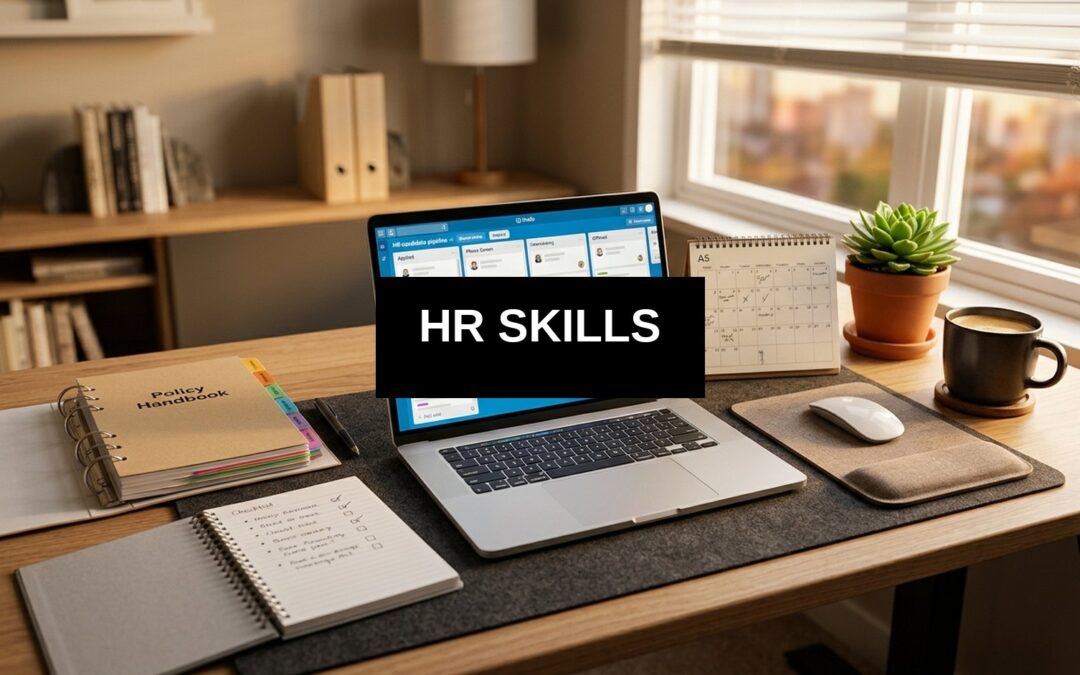
The HR generalist’s job used to be measured by how much paperwork moved. Now the HRMS sends the leave reminders, an AI assistant drafts the job post and ranks the applicants, and employees check their own payslips on a phone. What is left for the person is the part software handles badly: judging whether a ranked shortlist is any good, explaining a policy change under the Labour Codes to a worried team, keeping candidate and employee data within the DPDP Act, and calming a manager who wants to act before thinking. The HR skills worth paying for have moved accordingly, and so have the skills a talent acquisition specialist needs to close roles.
This guide is for founders, HR heads and recruiters filling either job. It covers the functional skills for both, with a practical check for each, then the working habits that separate a dependable generalist from a busy one, what has gained and lost weight, a matrix by level and an assessment process built around real tasks.
Core HR skills for generalists and talent acquisition specialists
Finding people who are not looking
Portal searches find active applicants. A strong recruiter also knows where passive candidates gather for each kind of role, such as alumni groups, trade associations, referral networks or the companies that train people well, and writes outreach that gets a reply. How to check it: name a hard-to-fill role from your current list and ask the candidate to write the first message they would send a passive candidate on LinkedIn. Judge whether it is short, specific to the person and honest about the role.
Turning a vague brief into a screen
Hiring managers often say “someone smart with good communication”. A good talent acquisition specialist turns that into must-haves, nice-to-haves and a short phone screen that tests them. How to check it: hand over a loose brief written by one of your managers and give the candidate a short while to produce the criteria and the screening questions. Look for questions that separate candidates, not ones that everyone passes.
Closing offers without overpromising
Offers fall through when a recruiter learns too late why the candidate is moving or what a rival is offering. Good closers find out early and keep the conversation truthful. How to check it: role-play a candidate who has just received a counter-offer from their current employer. Listen for questions about motive and timing before any talk of matching, and for refusal to promise anything the company has not approved.
Configuring the HRMS, not just using it
Darwinbox, Keka, Zoho People and greytHR all let HR set leave types, shift rules, approval chains and onboarding workflows. A generalist who can configure and test them does not need to raise a vendor ticket every time a rule changes. How to check it: ask the candidate to describe, step by step, how they last set up a new leave or attendance rule in an HRMS, and how they tested it on a few employees before switching it on for all.
Statutory and labour law literacy
PF, ESI and professional tax are the daily part. The Labour Codes have since changed how wages are defined and how several HR processes are framed, so policies and offer structures need a fresh look. How to check it: ask what their last employer changed in policies or salary structures after the Labour Codes took effect, and what they confirmed with a consultant or lawyer instead of deciding alone. A candidate who admits a gap and names who they would ask is safer than one who answers every point with confidence.
Onboarding that sticks
Many early exits trace back to a poor first fortnight: no laptop, no buddy, a manager who was travelling. A generalist designs the joiner’s first weeks with the manager, not for them. How to check it: name a role you hire often and ask for a one-page plan for its first week, covering access, introductions, a buddy and a check-in. See whether the manager has a real job in the plan.
Documenting employee relations cases
Warnings, grievances and performance plans depend on the written record. Good notes are factual, dated, free of opinion and written as if a stranger will read them later. How to check it: give the candidate a manager’s angry, rambling email about a team member and ask them to turn it into a neutral file note. Check what they removed, what they kept and what they would ask the manager to clarify.
Reading basic people data
Leadership will ask why people are leaving and how long roles stay open. A generalist should know how attrition and time to fill are calculated and what distorts them. How to check it: ask the candidate to explain how they would calculate monthly attrition and why counting interns or contract staff in it could mislead the founders.
Working skills that separate good HR generalists from average ones
- Saying no to managers, politely. The generalist often has to stop a hasty termination or an off-policy offer. The good ones explain the risk, offer an alternative and record the conversation.
- Keeping confidences under pressure. Colleagues will fish for salary or exit details over lunch. Dependable people deflect without sounding secretive.
- Closing loops. Every unanswered query or pending document costs trust. Strong generalists keep a simple tracker and close items before being chased.
- Fairness that both sides can see. Employees and managers each need to believe HR will hear them out. That means listening fully, checking facts and explaining decisions, even unpopular ones.
HR skills that matter more in 2027, and those that matter less
Mattering more. Checking AI output has become a core recruiting skill, because tools now screen and rank CVs, and someone has to spot when the ranking favours the wrong signals or quietly filters out good candidates. Remote interviews have made identity checks and proxy detection part of the TA job. Data protection is no longer abstract: the DPDP Act shapes how candidate databases, ID documents and employee records are collected, stored and deleted, and the generalist is usually the person handling them. Labour law literacy has gained weight with the Labour Codes, as has the ability to configure HRMS workflows rather than wait for the vendor.
Mattering less. Manual data entry, file maintenance and chasing signatures shrink as self-service and e-signatures spread. Posting the same job on many boards counts for less than writing one good post and sourcing directly. Keyword matching CVs by hand is largely automated, so a recruiter who only filters is easy to replace. Knowing every clause of the old labour laws by heart also matters less than knowing where the new rules apply and when to ask an expert.
HR generalist skills matrix by level
| Skill area | Junior | Mid-level | Senior |
|---|---|---|---|
| Sourcing | Searches portals with guidance | Finds passive talent for most roles | Builds channels and referral programmes |
| Screening | Runs a set phone screen | Designs screens with managers | Trains managers to interview well |
| Offers | Prepares letters accurately | Closes within approved bands | Handles senior and contested offers |
| HRMS | Keeps records clean | Configures leave and workflows | Leads setup or migration |
| Statutory and law | Follows PF and ESI checklists | Spots policy gaps | Updates policies with expert input |
| Employee relations | Logs queries, escalates | Handles first warnings and grievances | Manages complex cases and exits |
| People data | Maintains trackers | Reports attrition and hiring metrics | Explains trends to leadership |
How to assess HR skills in a hiring process
Begin with a clear HR generalist job description that states how much of the role is recruiting, then use steps that show real work instead of a conversation about it.
- Set a short take-home pack. Include a loose hiring brief, a manager’s complaint email and an employee’s question about their notice period. The replies show how the candidate sorts requirements, keeps a neutral tone and explains a rule to someone who dislikes it.
- Ask a hiring manager to join one round. Recruiting is a service to managers, and their read on whether the candidate asks good questions is worth more than an HR panel’s alone.
- Take references from a manager they served. Ask how quickly roles closed with this person and whether the joiners stayed, not just whether they were pleasant.
- Test discretion indirectly. Mention a sensitive situation from another company and watch whether the candidate offers gossip in return.
Red flags on a CV: every HR function listed with no example of any; a large number of hires claimed with no roles named; HRMS names without any described setup or use; frequent HR moves at the end of each appraisal season; and talent acquisition profiles that never mention a hiring manager.
Frequently asked questions
Which HR skills can a fresher realistically bring?
Organisation, clear writing, comfort with spreadsheets and good manners with candidates. The HRMS, statutory steps and employee relations are learned on the job under a senior colleague.
Do HR generalists need a formal certification?
It helps less than evidence of work. A postgraduate HR qualification gives grounding, but a candidate who has run hiring and records well for a real team often outperforms one with only credentials.
How well should a talent acquisition specialist understand the jobs they fill?
Well enough to hold a sensible first conversation with a candidate and to know which claims to check. For technical roles, a recruiter who has learned the vocabulary and the common skill combinations closes faster and wastes fewer interviews.
Should HR generalists be expected to use AI tools?
Yes, for drafting posts, summarising notes and first-pass screening, as long as they check the output and keep personal data within your company’s rules. Ask how they verify what the tool produced.
Zilo AI can help you hire HR generalists in India, along with talent acquisition specialists for a hiring drive, and you can browse the other people roles on our non-IT hiring hub. Share the headcount, HRMS and hiring load with us through the contact page and we will come back with a shortlist.