A candidate says they’re “highly organized” and “great under pressure.” How do you know that will hold when three deliverables collide, a client changes scope, and a quality issue appears two hours before handoff?
That’s the gap in most interview questions about time management. Generic prompts invite polished, memorized answers. Candidates know to say they use calendars, make lists, and prioritize important work. None of that tells you whether they can sequence work, surface trade-offs early, and protect quality when the schedule gets messy.
The stakes are real. In fast-moving sectors, time management keeps showing up as a core hiring filter. A 2023 LinkedIn Global Talent Trends report found that 85% of hiring managers rank time management among the top five competencies for fast-paced roles, and poor time management contributes to 23% of employee failures within the first 18 months, according to a Harvard Business Review study summarized in Clevry’s guide to time management interview questions. That’s why strong interviewers don’t stop at “Are you organized?” They test how someone thinks, decides, communicates, and recovers.
This guide is built for that. You’ll get eight practical interview questions, plus the part most articles skip: follow-up prompts, a scoring rubric, red flags, and role-specific variations for annotation, transcription, translation, and other high-growth delivery environments.
If you also want to assess judgment under pressure more broadly, pair these prompts with Top 10 Scenario Questions for Interview Success.
1. Tell Me About a Time You Had Multiple Deadlines. How Did You Manage?
How can you tell whether a candidate manages competing deadlines, or just describes being busy in polished interview language?
This question works because it forces a candidate to show their operating method under pressure. Strong answers make priorities visible. The candidate should explain what hit at once, how they sorted urgency from impact, what they changed, and who they kept informed. In annotation, translation, and other deadline-heavy delivery roles, that usually includes reviewer dependencies, client revisions, QA requirements, and handoff timing across teams.
The best answers also show judgment. A candidate who has really handled overlapping deadlines can explain the trade-off they made and why it was the right one for the business, not just for their own workload.
What to listen for
Listen for sequence, criteria, and communication.
A credible answer usually follows a clear chain: they mapped the deadlines, identified which ones were fixed versus flexible, checked downstream risk, then reallocated time, people, or scope. They should be able to name the criteria they used. Client impact, SLA commitments, dependency timing, revenue risk, error tolerance, and escalation paths are all legitimate signals.
Weak answers stay at the level of activity. You hear that they made a list, worked hard, or multitasked. You do not hear how they decided.
Practical rule: If the candidate cannot explain why one task moved ahead of another, they are describing effort, not time management.
A realistic example helps separate operators from performers. An AI/ML annotation lead might have one dataset due for model retraining while a second client escalates a QA issue that blocks deployment. A strong candidate talks through reassignment, sampling risk, reviewer bottlenecks, and stakeholder updates. “I stayed late and got it done” is not enough unless they can explain the system behind the recovery.
This is also a useful place to test whether the candidate understands workload design, not just personal productivity. Teams that handle variable demand usually need stronger prioritization rules and cleaner handoffs, which ties closely to operational efficiency improvement methods for service teams.
Follow-up prompts and scoring
Use follow-up questions to get past the prepared version of the story:
- Priority test: “What criteria did you use to decide what moved first?”
- Trade-off test: “What did you delay, and how did you communicate that?”
- Capacity test: “What did you keep for yourself, and what did you reassign?”
- Quality test: “What controls did you use to avoid rework while moving faster?”
- Failure test: “What would have gone wrong if you had handled the priorities differently?”
Excellent: Gives a specific example with overlapping deadlines, names the prioritization criteria, explains trade-offs, shows proactive communication, and protects quality while adjusting the plan.
Good: Shares a relevant example and some prioritization steps, but the reasoning is partial, reactive, or light on communication detail.
Poor: Stays generic, relies on multitasking language, cannot explain trade-offs, or frames success as working longer hours instead of making better decisions.
Red flags
These patterns usually predict execution problems:
- Busy but vague: “I had a lot going on, so I just stayed organized.”
- No decision model: They cannot explain why one deadline outranked another.
- Silent reprioritization: They changed commitments without updating affected stakeholders.
- Hero mode: They present overwork as the only solution.
- No quality control: They sped up delivery but never mention checks, review stages, or error prevention.
For role-specific variation, adjust the prompt to match the operating environment. For a translation project manager, ask how they handled conflicting linguist availability, client review windows, and terminology approval delays. For an annotation team lead, ask how they balanced throughput targets against labeling consistency, escalation queues, and retraining deadlines.
If you want a practical benchmark for the kind of deadline judgment good operators describe, compare the answer against these real strategies to meet project deadlines.
2. Describe Your Approach to Planning and Organizing Your Workday or Project Timeline
How does a candidate turn a full calendar into an executable plan instead of a hopeful list?
This question gets at operating discipline. Strong candidates can explain how they translate incoming work into priorities, checkpoints, and handoffs that hold up under pressure. Weak candidates stay at the level of preference. They like lists. They keep a calendar. They try to stay focused. None of that tells you whether they can run a day or a project timeline with control.

The answers worth hiring for sound concrete. A transcription coordinator might explain how they sort files by difficulty, reserve uninterrupted time for high-error-risk work, batch reviewer queries, and leave a recovery window for rework. A translation project manager should be able to map a timeline around linguist availability, terminology approval, QA stages, and client review dates. That level of detail shows they understand planning as sequence and dependency management, not calendar decoration.
Good planning also shows up in how candidates protect throughput. In distributed service teams, the people who plan well create fewer avoidable delays, fewer rushed QA cycles, and fewer last-minute escalation drills. That is the same discipline behind stronger operational efficiency improvement.
What a strong planning answer includes
Use this question to listen for the mechanics behind the routine:
- Work intake: They explain how they assess new tasks for urgency, effort, and dependency before adding them to the day or project plan.
- Time horizon: They distinguish daily execution from weekly or project-level planning.
- Milestones: They break larger work into stages with review points.
- Dependency management: They identify what is blocked by approvals, upstream inputs, or QA capacity.
- Buffer decisions: They leave room for revisions, stakeholder feedback, and work that expands after kickoff.
Tool choice matters less than tool use. A candidate who says, “I use Asana to set dependencies and review blocked tasks every afternoon,” is giving you evidence. A candidate who lists Trello, Notion, and Google Calendar without explaining the workflow is giving you brand names.
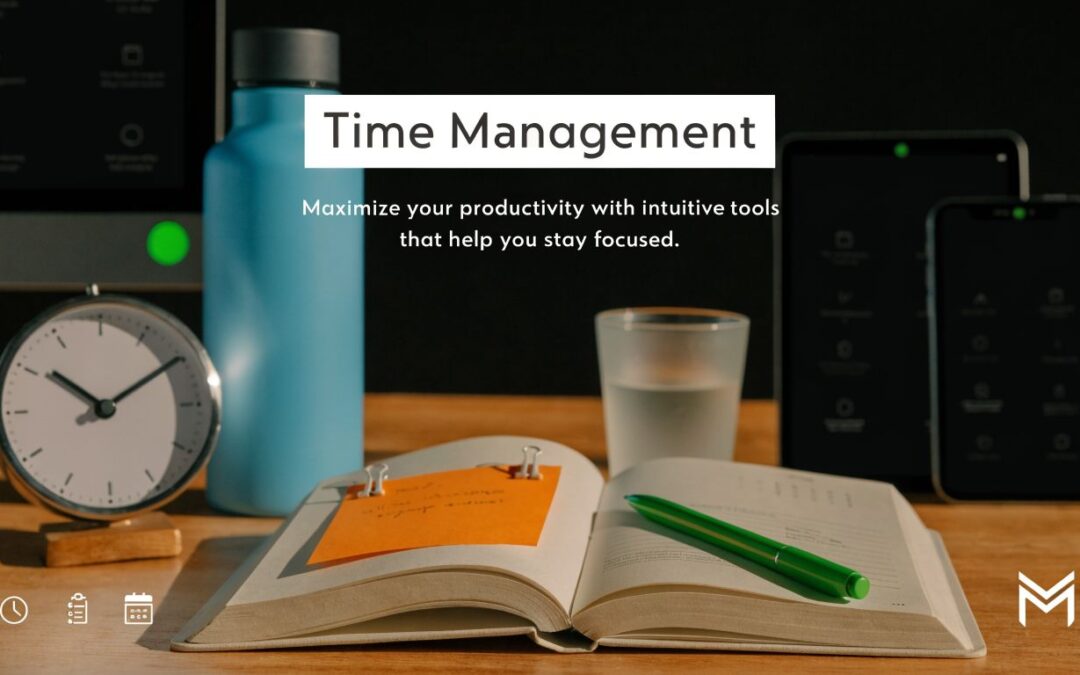
Here’s a good point to show the candidate a planning context visually:
Follow-up prompts and scoring
Ask for the operating model, not the slogan:
- Workday design prompt: “Walk me through how you set up your day before you start executing.”
- Timeline prompt: “How do you plan a project that runs across several days or weeks?”
- Dependency prompt: “What do you do when your part of the work depends on someone else finishing first?”
- Adjustment prompt: “How often do you review the plan, and what triggers a change?”
- Constraint prompt: “What part of your planning system breaks first when volume spikes?”
Scoring rubric
Excellent: Describes a repeatable planning system with clear prioritization logic, milestone setting, dependency tracking, and scheduled review points. Explains trade-offs, names buffers deliberately, and shows how quality checks fit into the plan.
Good: Has a defined routine and can explain how tasks get organized, but the answer is lighter on dependencies, risk management, or replanning discipline.
Poor: Describes planning in generic terms, relies on memory or an undifferentiated to-do list, or treats urgency as the default method for deciding what gets done.
Red flags
Watch for patterns that create avoidable execution drag:
- Calendar as a substitute for judgment: They schedule everything but cannot explain priority changes.
- No planning horizon: They can describe today, but not how they manage a week or project timeline.
- Missing dependencies: They talk as if work starts the moment they touch it.
- No buffer logic: Their plan assumes every task finishes exactly on time.
- Tool-first answer: They lead with software instead of process.
Role-specific variation
For AI/ML annotation roles, ask: “How do you plan batch work when QA feedback, guideline changes, and escalation queues can alter throughput?” Strong candidates should mention sampling, review cadence, and reserve capacity for relabeling.
For translation services roles, ask: “How do you build a timeline when linguist availability, client terminology approval, and reviewer turnaround all affect delivery?” Strong candidates should explain sequencing, contingency options, and where they place quality gates before final handoff.
3. How Do You Handle Interruptions and Unexpected Changes to Your Priorities?
What does a candidate do when the plan breaks at 2 p.m.?
This question tests judgment under pressure. Strong candidates do more than claim they can adapt. They explain how they triage the interruption, protect the work already in motion, and reset the day without creating hidden delays for other people.
That is the behavior you want to measure. Teams do not struggle because priorities change. They struggle because people cannot explain which work should pause, which work should continue, and who needs to know.
A realistic AI data services example makes this clear. An annotator is halfway through a batch when a client raises a labeling-policy issue that may affect completed items. A weak answer centers on speed: “I switched tasks and handled the request.” A strong answer shows control: “I checked scope, stopped work that could create rework, alerted the reviewer or manager, and rebuilt the remaining queue based on delivery risk.” The difference is costly in production environments. One response creates churn. The other contains it.
Use follow-up prompts that force the candidate past a polished headline answer:
- Triage: “How do you decide whether an interruption changes priorities or just interrupts your attention?”
- Impact: “What work did you pause, and how did you decide that was the right trade-off?”
- Communication: “Who did you update, and what did you tell them about timing or risk?”
- Recovery: “Once the interruption was handled, how did you get back into the original work?”
- Prevention: “What did you change afterward to reduce the same kind of disruption next time?”
Good candidates can describe a method. Strong candidates can also name the trade-offs. They know that saying yes to an urgent request often means renegotiating another commitment, narrowing scope, or changing the review sequence. That level of clarity is a better predictor of execution than a generic claim about being flexible. It also pairs well with broader performance appraisal methods for evaluating execution and accountability, especially if you are hiring for roles where interruptions can affect both throughput and accuracy.
The signal here is not responsiveness alone. It is controlled reprioritization.
Scoring rubric and red flags
Excellent: Explains a clear triage method, assesses downstream impact before switching, communicates changes to the right stakeholders, and has a defined way to resume focused work. Mentions trade-offs such as delay risk, rework, or quality exposure.
Good: Can handle change and gives a credible example, but the answer lacks a repeatable framework or skips how they communicated impact and returned to planned work.
Poor: Treats every interruption as urgent, abandons prior commitments without assessment, or frames disruption as something that “just happens” to them.
Red flags tend to show up in the process details:
- Everything gets top priority: They cannot distinguish business-critical work from noise.
- Silent replanning: They shift deadlines or sequence without informing affected people.
- No recovery method: After one interruption, the rest of the day becomes reactive.
- No cost awareness: They talk about speed but not rework, quality drift, or missed commitments.
For AI/ML annotation roles, use this variation: “A client changes guidance during a production sprint. How do you handle in-flight work, reviewer calibration, and any items already completed under the old rule?” Strong answers should cover containment, escalation, and whether prior output needs sampling or full recheck.
For translation services roles, ask: “A client sends late terminology changes after translation has started. How do you adjust linguist work, review steps, and delivery expectations?” Strong candidates should talk about scope assessment, terminology alignment, and where they would place the next quality gate before final delivery.
4. What Methods Do You Use to Track Your Progress and Stay Accountable?
Time management without visibility turns into guesswork. This question tells you whether the candidate monitors work early enough to intervene before a deadline slips.
In remote and distributed teams, that’s an essential skill. Project Manager Template reports that 78% of hiring managers in tech and AI sectors use behavioral questions to assess prioritization, and tools such as Trello and Google Calendar appear in 65% of top candidate responses, according to its guide on mastering time management interview questions. The interesting part isn’t the tool choice itself. It’s whether the candidate uses a tool to create real accountability.

A solid annotation example would include tracking completed batches, error patterns, reopened items, and QA turnaround. A strong transcription example might include file completion status, revision count, and delivery windows. A weak answer just says, “I keep a spreadsheet.”
What to probe
Ask candidates what they track before asking what software they use. The best people know which signals matter.
- Metric prompt: “What indicators tell you you’re on track, or not?”
- Cadence prompt: “How often do you review your progress?”
- Escalation prompt: “At what point do you tell someone you’re behind?”
- Behavior prompt: “What do you change when the data says your plan isn’t working?”
This question often reveals maturity. Candidates who only track output may miss quality decay. Candidates who track everything often create overhead and lose focus. You’re looking for selective, useful visibility.
Many teams connect this directly to performance appraisal methods that reinforce accountability.
Scoring rubric and red flags
Excellent: Tracks relevant progress indicators, reviews them on a defined cadence, adjusts behavior based on the signal, and communicates status before risk becomes failure.
Good: Uses a workable method and reviews progress regularly, but the system is basic or too reliant on manager prompts.
Poor: Doesn’t track progress until late in the process, relies on memory, or confuses being busy with being on schedule.
Common red flags include:
- Vanity tracking: They monitor lots of activity, but not delivery risk.
- No escalation point: They wait until a deadline is already missed.
- Manager dependence: Accountability only appears when someone asks for an update.
For translation coordinators, use a role-specific variant: “How do you track both linguistic consistency and delivery timing across multiple languages at once?” That forces them to balance throughput with quality control.
5. Tell Me About a Time You Failed to Meet a Deadline. What Did You Learn?
What does a candidate do when the plan breaks?
This question matters because time management is not just about clean execution. It is also about recovery, judgment under pressure, and whether someone can turn a miss into a better operating method. Rehearsed candidates often try to swap in a harmless setback or a disguised win. That answer tells you very little. A useful answer includes a real deadline miss, a clear explanation of their role in it, and a concrete change they made after the fact.
I put this question in the high-signal category because it reveals how a person handles discomfort. Strong candidates do not protect their image at the expense of credibility. They can say, "I missed it because I under-scoped review time, escalated too late, and assumed the handoff would be simpler than it was." That level of ownership is far more valuable than a polished story about perfection.
A credible answer has four parts. The situation. Their mistake. The impact on the team or customer. The operating change that came next.
For example, a translation coordinator might describe missing a client delivery because legal review, terminology approval, and final QA were all treated as one block instead of three separate stages. If they then explain that they now build review buffers by language pair and flag external dependencies at kickoff, that is evidence of learning you can trust.
What to probe in the answer
The first answer is rarely enough. Use follow-up prompts to test whether the lesson was real or just interview polish.
- Ownership prompt: “What part of the miss was within your control?”
- Impact prompt: “What was the consequence for the client, team, or downstream work?”
- Recovery prompt: “What did you do immediately after you realized the deadline would slip?”
- Change prompt: “What process did you change so the same failure was less likely to happen again?”
- Proof prompt: “Tell me about a later project where that new approach helped.”
Role context matters here. In AI/ML annotation, ask whether the miss came from throughput assumptions, unclear guidelines, reviewer bottlenecks, or relabeling caused by quality drift. In translation or localization, test for missed deadlines tied to handoffs, source-text changes, reviewer availability, or terminology disputes. Strong candidates can explain the operational failure point, not just the emotional takeaway.
Scoring rubric and red flags
Excellent: Shares a real missed deadline, names their contribution to the failure without deflecting, explains the business impact, and describes a specific process change they still use. Their follow-up answers show judgment about escalation timing, dependency management, and risk control.
Good: Provides a genuine example and accepts some responsibility, but the lesson stays broad. They improved something, yet the change is not fully defined or has not been tested across later work.
Poor: Avoids the question, offers a trivial miss, blames other people or vague circumstances, or cannot explain what changed afterward. If they say they have never missed a deadline, treat that as a credibility problem, not a strength.
Common red flags include:
- Deflection: The story assigns responsibility everywhere else.
- Minimization: They pick a miss so small that no meaningful judgment is required.
- No operating lesson: They talk about being more careful, but cannot name a new planning step, checkpoint, or escalation rule.
- Late communication: They knew the work was slipping and said nothing until the deadline was already gone.
For annotation, transcription, and translation roles, add one more test. Ask whether they would rather ship late or ship on time with known quality problems. The best candidates answer with context. They explain the quality threshold, the customer impact, and when rework creates more damage than a short delay. That trade-off is where real time management maturity shows.
6. How Do You Balance Quality with Speed in Your Work? Give Me an Example.
This question gets to the core tension behind time management. Some candidates move fast by cutting corners. Others preserve quality by moving too slowly. Neither is reliable at scale.
In AI data work, this trade-off is constant. Label too quickly and model quality suffers. Review too slowly and the client’s deployment schedule slips. The people you want can explain where speed comes from. Usually it’s from process design, templates, checklists, reviewer timing, or better batching. It’s rarely from “working harder.”

This is also where practical tool fluency matters. In strong interview answers, candidates often mention checklists, terminology databases, QA gates, batch review logic, or scheduled spot checks. Weak candidates frame quality and speed as opposite ends of a seesaw and never explain how they improve both together.
What to probe in the answer
Push past slogans like “I never sacrifice quality.” Every role has thresholds, service expectations, and trade-offs.
Ask questions like these:
- Mechanism prompt: “What system helped you move faster without increasing errors?”
- Threshold prompt: “Where will you never cut corners?”
- Communication prompt: “If timing pressure threatens quality, how do you raise it?”
- Review prompt: “When in the workflow do you check for mistakes?”
A realistic example from transcription would involve reviewing terminology and speaker labels early rather than waiting until the full file is complete. A strong translation answer might include approved glossaries and segmented review stages. A strong annotation answer might describe guideline calibration before production volume increases.
Scoring rubric and red flags
Excellent: Gives a specific example, explains the process that improved speed and protected quality, and shows judgment about essential quality points.
Good: Understands the trade-off and uses some structure, but the method is incomplete or too dependent on individual effort.
Poor: Equates speed with urgency, quality with perfectionism, or can’t explain how the balance is managed.
Red flags include:
- Heroics over system: “I just work faster when needed.”
- Perfectionism: They delay delivery because everything must be polished beyond requirement.
- Blind acceleration: They hit deadlines by pushing defects downstream.
For teams hiring into multilingual delivery, ask a variation such as: “How do you keep consistency high when turnaround expectations shorten?” That usually exposes whether the candidate knows how to use style guides, reviewer routing, and checkpoints properly.
7. How Do You Estimate How Long Tasks Will Take, and What Do You Do When Your Estimate Is Wrong?
What does a candidate do before they commit to a deadline?
This question gets past generic answers fast. Strong candidates treat estimation as a decision process, not a guess. They identify what is known, what is missing, what could expand the work, and when they need to update the plan. Weak candidates jump to a number, then defend it long after the estimate has stopped being realistic.
That distinction matters in delivery-heavy roles. A difficult audio file, a translation job with terminology review, and a new annotation workflow with unclear edge cases all have different time drivers. Good candidates know where effort hides. They ask about file quality, dependencies, review stages, stakeholder response time, and whether the task has a stable definition yet.
What to listen for
The best answers follow a method you can test with follow-up prompts.
- Scope prompt: “What do you clarify before you estimate?”
- Assumption prompt: “What assumptions would you call out with the estimate?”
- Reference prompt: “What past work would you compare this to?”
- Correction prompt: “At what point would you tell someone the estimate is off?”
A credible answer includes four parts. First, they define the work clearly enough to estimate it. Second, they break the task into stages instead of giving one top-line number. Third, they use prior examples or throughput data from similar work. Fourth, they explain how they communicate early when reality changes.
I trust candidates more when they talk about ranges, checkpoints, and confidence levels than when they give a precise deadline too quickly. Precision without context is a warning sign.
Strong estimation is less about hitting the first number and more about exposing uncertainty early enough to protect the schedule.
Scoring rubric and red flags
Excellent: Breaks work into parts, asks clarifying questions, uses prior output or comparable tasks, and explains exactly when they would re-estimate and notify others.
Good: Has a sensible process and some awareness of uncertainty, but the approach depends too heavily on personal instinct or lacks a clear review point.
Poor: Gives a fast guess, skips assumptions, and treats the estimate as fixed until the miss is obvious.
Red flags include:
- False precision: They offer exact timing before asking about inputs, review needs, or blockers.
- No variance control: They cannot explain how they build buffer or handle unknowns.
- No learning loop: They do not compare estimated time against actual time after the work is done.
- Late escalation: They wait until the deadline is already at risk before raising the issue.
For AI/ML annotation roles, use a variation like: “How would you estimate a new labeling task if the guidelines are still changing?” Strong candidates should mention pilot batches, adjudication time, edge-case review, and a planned re-estimate after initial calibration. For translation services, ask how reviewer availability, glossary alignment, and formatting complexity affect timing. That answer shows whether the candidate understands production reality, not just personal pace.
8. Describe Your Experience Working on Long-Term vs. Short-Term Projects. How Do You Maintain Momentum?
Some candidates are excellent in sprints and fall apart in extended delivery cycles. Others thrive in steady-state work but struggle when the pace spikes. This question tells you where their stamina, discipline, and motivation really sit.
That’s useful in environments with both rapid-turn and sustained production work. A research transcription program may run continuously for months. An annotation sprint for model tuning may require concentrated output over a short window. A multilingual content rollout may combine long-term governance with short-term spikes around launches.
The best answers distinguish between the two modes instead of pretending they approach both the same way. Short-term work often demands tighter prioritization and faster decision cycles. Long-term work needs milestone design, fatigue management, and visible progress markers so quality doesn’t drift halfway through.
What to look for in sustained execution
Strong candidates usually explain how they break long work into meaningful checkpoints. They don’t rely on motivation alone.
Use follow-up prompts like these:
- Momentum prompt: “How do you keep progress visible on a long project?”
- Fatigue prompt: “What do you do when the middle of the project starts to drag?”
- Consistency prompt: “How do you prevent quality from slipping over time?”
- Mode-shift prompt: “What changes in your approach when the project is a two-day sprint instead of a multi-month delivery?”
A solid annotation example would involve a long-running dataset program divided into review cycles, calibration checkpoints, and refreshed guidance as edge cases emerge. A short-term example might involve an urgent voice annotation batch with daily progress reviews and narrowed communication channels to accelerate decisions.
Scoring rubric and red flags
Excellent: Shows distinct strategies for short-term and long-term work, uses milestones to sustain momentum, and manages fatigue without letting quality decay.
Good: Has practical experience in both modes, but the method for maintaining momentum is underdeveloped.
Poor: Talks only about preferring one kind of work, depends on external pressure to stay engaged, or can’t explain how they maintain consistency over time.
Red flags tend to show up in motivation language:
- Deadline dependency: They only perform when pressure is immediate.
- Long-project drift: They can start strong but don’t explain the middle phase.
- No quality guardrails: They assume consistency will take care of itself.
8-Question Time Management Interview Comparison
| Question | 🔄 Implementation complexity | ⚡ Resource requirements | 📊 Expected outcomes | Ideal use cases | ⭐ Key advantages / 💡 Tip |
|---|---|---|---|---|---|
| Tell Me About a Time You Had Multiple Deadlines, How Did You Manage? | Moderate, requires probing for specifics and trade-offs | Low, interviewer time, scoring rubric | Evidence of prioritization, stakeholder communication, delivery under pressure | High-volume annotation, transcription, overlapping translation deliverables | Reveals real-world time-management and proactivity; Tip: use STAR and name tools used |
| Describe Your Approach to Planning and Organizing Your Workday or Project Timeline | Medium, assesses systems and repeatability | Low–Medium, ask for tools, review examples | Clear process, predictability, milestone-driven plans | Roles needing consistent workflows and scaling (annotation/PM) | Identifies systematic, scalable candidates; Tip: cite specific tools and review cycles |
| How Do You Handle Interruptions and Unexpected Changes to Your Priorities? | Moderate, evaluates judgment and adaptability | Low, scenario examples and follow-ups | Shows resilience, triage ability, boundary-setting | Dynamic client-facing work, emergency translation or QA incidents | Highlights flexibility without abandoning commitments; Tip: describe triage + focus-restoration techniques |
| What Methods Do You Use to Track Your Progress and Stay Accountable? | Medium, requires concrete metrics and frequency | Medium, may need dashboards or examples of tracking tools | Visibility into progress, self-management, early issue escalation | Remote/distributed teams, client-facing deliverables | Signals autonomy and transparency; Tip: mention specific metrics, review cadence, and escalation steps |
| Tell Me About a Time You Failed to Meet a Deadline, What Did You Learn? | Medium, needs candid, reflective response | Low, interviewer time for deeper probing | Demonstrates accountability, learning, process improvements | Assessing maturity for client-reliant roles | Reveals growth mindset and corrective action; Tip: take responsibility and state measurable changes |
| How Do You Balance Quality with Speed in Your Work? Give Me an Example. | High, probes trade-off frameworks and process design | Medium, may require metrics or process artifacts | Demonstrates process improvements that preserve quality while improving throughput | Service roles prioritizing both accuracy and turnaround | Shows ability to optimize processes, not just personal effort; Tip: provide metrics and tools (checklists, peer review) |
| How Do You Estimate How Long Tasks Will Take, and What Do You Do When Your Estimate Is Wrong? | High, evaluates estimation methods and feedback loops | Medium–High, benefits from historical data or time-tracking examples | Predictability improvements, better resource allocation, continuous refinement | Project planning, resourcing for annotation/transcription/translation | Identifies systematic estimators who track accuracy; Tip: use historical data, confidence ranges, and course-correct protocols |
| Describe Your Experience Working on Long-Term vs. Short-Term Projects, How Do You Maintain Momentum? | Medium, explores motivation and breakdown strategies | Low–Medium, examples of milestones, rotation tactics | Sustained engagement, quality maintenance over time | Long annotation contracts, recurring transcription, mixed-duration portfolios | Shows versatility across time horizons; Tip: break work into milestones, rotate tasks, and celebrate small wins |
Hiring for Impact: Integrating Your Findings
A candidate’s time management skill isn’t just about punctuality. It’s a proxy for judgment, self-awareness, planning discipline, communication quality, and operational reliability. That’s why interview questions about time management are so useful when you stop treating them like soft, generic prompts and start using them as structured tests.
The pattern to watch across all eight questions is consistency. A strong candidate doesn’t suddenly become organized only when you ask about planning, then vague when you ask about missed deadlines, then overly reactive when you ask about interruptions. The methods should line up. Their prioritization logic should match their planning style. Their progress tracking should support their estimation. Their explanation of a deadline miss should connect to a real process improvement.
That consistency matters because people rarely fail in execution for one isolated reason. They miss because weak planning meets weak estimation. Or because they take on interruptions without triage. Or because they don’t track progress until the risk is already visible to everyone else. Surface-level interviews miss these links. A structured interview reveals them.
I’d also encourage interviewers to score evidence, not eloquence. Some candidates are polished storytellers. Others are less fluid but operationally stronger. If you only reward confidence, you’ll over-select people who sound organized and under-select people who run disciplined workflows. The rubric helps prevent that by forcing you to judge concrete behaviors: decision criteria, escalation timing, quality controls, adjustment habits, and ownership after a miss.
For hiring teams in AI/ML annotation, transcription, and multilingual translation, role-specific follow-ups are where the best signal appears. Ask about QA dependencies. Ask about guideline changes. Ask about client revisions that arrive late. Ask how they estimate complex work when instructions are incomplete. Ask how they preserve quality through repetitive, high-volume cycles. Those are the moments when rehearsed answers start to crack and real operating habits come through.
A good interview process also compares candidates across the same probes. If one person says they use Jira, another says Asana, and another says a spreadsheet, don’t score the software. Score whether they can explain the workflow: how work gets broken down, what gets reviewed, when risk gets flagged, and how they know they’re still on track. Tools matter. Tool thinking matters more.
There’s also value in looking for healthy limits. Strong time managers don’t claim they can do everything. They know when to re-prioritize, when to ask for clarification, when to escalate a risk, and when pushing for more speed would create expensive rework. That kind of judgment is exactly what scaling teams need. Especially in delivery environments where one weak hire can create hidden operational drag across reviewers, project managers, and client-facing teams.
Used well, these questions help you hire people who are resilient, proactive, and accountable. They help you spot candidates who can maintain throughput without becoming sloppy, adapt without becoming chaotic, and recover from mistakes without hiding them. That’s the standard worth hiring for. It’s also the same standard Zilo AI applies when vetting reliable, high-quality talent for teams that need to scale without losing control.
If your team needs dependable people for annotation, transcription, translation, or broader manpower support, Zilo AI can help you build that capability with skilled, reliable talent matched to real delivery demands.