
Building an effective office team isn't about filling empty chairs anymore. It's about strategically assembling a powerhouse of talent—whether they're working from the office, from home, or a mix of both—that can genuinely push your business forward. This requires a shift away from old-school hiring and toward a more dynamic way of thinking that lines up what the company needs with what your people actually want.
Rethinking How We Build Teams Today
Let's be honest: the old way of building an office team is broken. For decades, the playbook was simple. You had a job opening, you found someone to fill it, and you sat them at a desk from 9 to 5. But that world is gone.
We're now seeing a major tug-of-war. On one side, you have executives pushing hard for a return to the office, hoping to bring back that in-person culture and collaboration. On the other, you have top talent who have tasted flexibility and aren't willing to give it up.
This clash leaves businesses in a tough spot. They're stuck paying for expensive, half-empty offices while their best people feel unheard. The real challenge of modern office team staffing isn't just about finding people with the right skills; it's about designing a team structure that actually works in this new environment.
The Disconnect Between Office Mandates and What's Actually Happening
The data tells a clear story that often clashes with mandatory in-office policies. For instance, in late 2025, office occupancy rates in major U.S. cities were stuck at just 53%, even as more companies rolled out strict return-to-office (RTO) rules.
That number highlights a very expensive problem. Companies are bleeding money on real estate that nobody is using, all while risking the loss of their best employees.
This isn't just a debate about where people work, either. It’s about being able to adapt. The skills we need are changing faster than ever, thanks to things like AI and automation. A job that was vital last year might be obsolete next year, and new, specialized roles can pop up almost overnight. Simply waiting for a position to open up and then trying to fill it is a recipe for falling behind.
The solution is to think like a workforce designer. You have to proactively align your talent strategy with your bigger business goals. That way, every single hire becomes a strategic investment in where you're headed.
Crafting a Workforce That Can Weather Any Storm
To get ahead, businesses need to ditch rigid, outdated structures for a more blended, fluid model. This means looking past the idea that every role needs to be a full-time, in-office position. A truly resilient team is built from a mix of different talent sources.
Here’s what that could look like:
- A Core In-Office Team: These are the roles that genuinely thrive on daily, face-to-face collaboration, mentorship, and spontaneous brainstorming.
- Remote and Hybrid Talent: Tapping into this pool gives you access to the best people, no matter where they live. It also boosts job satisfaction and can significantly cut down on overhead.
- Specialized On-Demand Partners: Need niche skills for a specific project, like multilingual data annotation or AI model training? Bringing in specialized partners gives you that expertise without the long-term commitment of a full-time hire.
By embracing this kind of flexibility, you can build a high-performing team that not only gets the job done today but is also ready for whatever comes next. To dive deeper into this, check out our guide on workforce optimization strategies. It lays out how to build a team that's both agile and perfectly aligned with your company's vision.
Building Your Strategic Staffing Blueprint
Great office staffing is so much more than just filling an empty seat. It’s about building a team with intention, where every single hiring decision directly supports your company's long-term vision. The first step is to take an honest, hard look at the team you have right now.
Instead of rushing to post a job ad for the exact same role that just opened up, pause for a moment. A truly strategic approach means figuring out which skills will actually propel your company forward over the next one to three years. This simple shift stops the reactive hiring cycle and helps you build a workforce that's ready for whatever comes next.
Pinpoint Your True Needs with a Skills Gap Analysis
A skills gap analysis is your secret weapon for smart workforce planning. It's essentially a method for comparing the skills your team currently has against the skills you need to hit your business goals. This isn't about finding faults; it’s about uncovering opportunities for growth and making sure your next hire is exactly who you need.
Imagine a tech company aiming to launch a new AI-powered product. Their development team is full of talented software engineers, but a closer look reveals no one has deep expertise in machine learning algorithms. The skills gap analysis flags this immediately. Now, instead of hiring another generalist developer, they know to seek out a machine learning specialist. That’s how you make sure your hiring directly fuels innovation.
Getting started is straightforward:
- Map Existing Skills: Create an inventory of the core competencies for every person on your team.
- Define Future Needs: List the specific, tangible skills required to achieve your upcoming business milestones.
- Identify the Gaps: Simply compare the two lists. The differences are your hiring priorities.
This exercise turns hiring from a shot in the dark into a data-driven strategy.
Define Roles That Attract Top Talent
Once you know the exact skills you're hunting for, it's time to write a job description that resonates with the right people. Generic job descriptions attract generic applicants. A sharp, compelling description, on the other hand, acts like a magnet for high-caliber professionals looking for their next big challenge.
Key Takeaway: Think of your job description as a marketing document. It shouldn't be a boring list of duties. It should sell the opportunity, your culture, and the real impact the new hire will have on the company's journey.
For highly specialized roles, like in AI development or multilingual data annotation, you have to be crystal clear. Vague phrases like "experience with AI" won't cut it. Get specific. Say something like, "proven experience deploying NLP models using Python and TensorFlow." This level of detail instantly filters out unqualified candidates and shows the experts you speak their language.
If you want to dive deeper into this part of the process, our detailed article on creating a recruitment and hiring plan can offer a lot more practical guidance.
This flowchart provides a simple but effective framework for deciding whether to bring someone on full-time for a core, long-term role or to engage flexible talent for more specialized, project-based work.
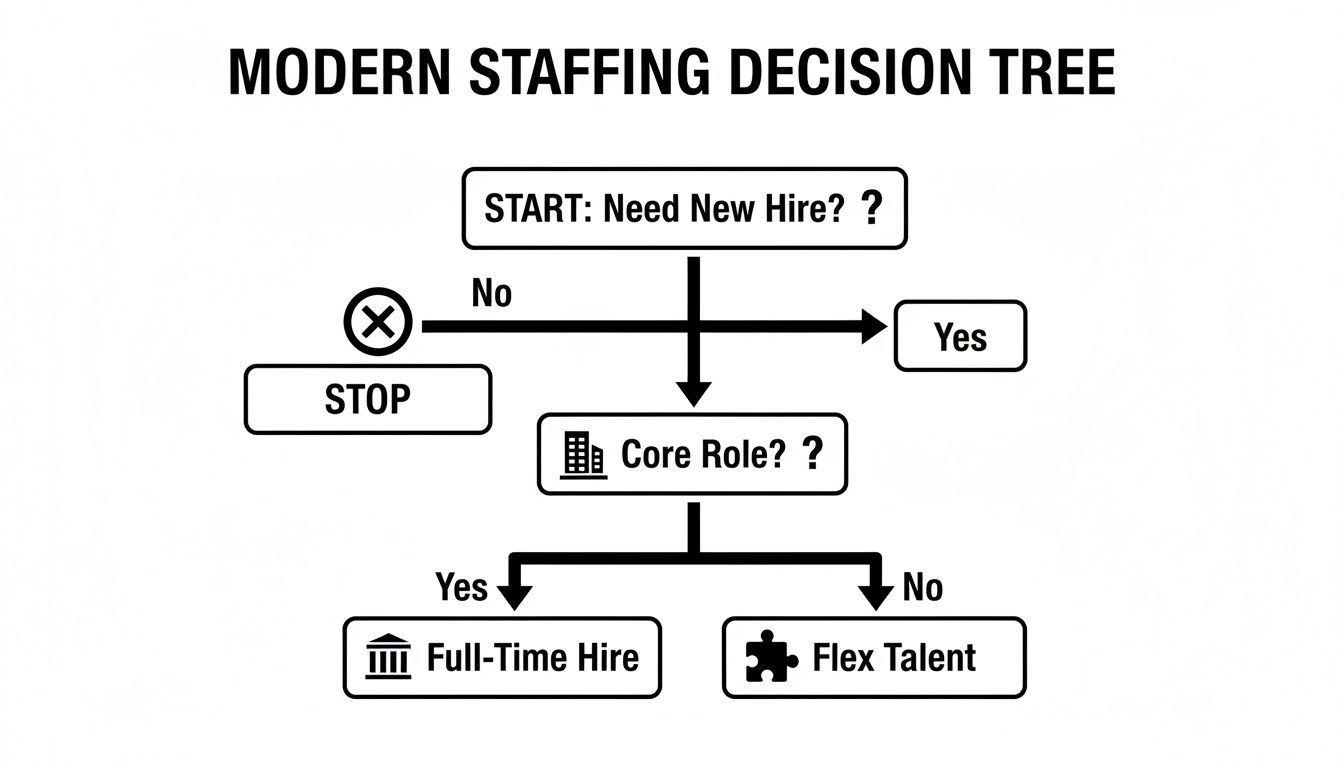
As you can see, it helps clarify when a long-term commitment makes sense versus when the agility of a flexible solution is the smarter move for building a balanced team.
Choosing the Right Staffing Mix
Today's workforce isn't one-size-fits-all, and your staffing plan shouldn't be either. The smartest blueprints incorporate a mix of different staffing models to create a team that's both agile and cost-effective. A blended approach gives you a stable foundation of full-time employees while allowing you to scale up or tap into niche skills whenever you need them.
To help you figure out the best approach, let's break down the most common options for building a modern office team.
Comparing Staffing Models for Modern Office Teams
This table compares traditional versus flexible staffing models to help businesses decide on the optimal mix of full-time, contract, and remote talent for their specific needs.
| Staffing Model | Key Benefits | Best For | Potential Challenges |
|---|---|---|---|
| Traditional In-Office | Strong company culture, easy collaboration, direct oversight. | Core business functions, roles requiring high levels of teamwork. | Limited talent pool, higher overhead costs, less flexibility. |
| Fully Remote | Access to a global talent pool, lower facility costs, improved work-life balance for staff. | Roles that can be performed independently, tech-focused positions. | Potential for disconnected culture, communication hurdles. |
| Hybrid Model | A blend of in-person collaboration and remote flexibility. | Most modern office roles, balancing team cohesion with autonomy. | Requires clear policies and scheduling to be effective. |
| Project-Based/Flex Talent | Access to specialized skills without long-term commitment, cost-effective for specific tasks. | Short-term projects, specialized needs like data annotation or market research. | Integration with the core team can be a challenge. |
By strategically combining these models, you can build an incredibly dynamic workforce. For example, you might have your core product and leadership teams in the office, hire remote engineers from around the world, and bring in a project-based partner for a one-off data analysis project. This is what a modern, effective office team staffing blueprint looks like in action.
Finding and Attracting Top Talent
Once you’ve got a solid staffing blueprint, the real work begins: finding the right people to bring it to life. In today's market, just tossing a job ad onto a popular board and waiting for the magic to happen is a recipe for getting lost in the noise. To build a truly effective office team, you have to be much more strategic.
This isn’t about just looking in the usual places. While the big job sites have their role, the best candidates often come from a more diversified search. The goal is to build a multi-channel recruiting engine that keeps a steady stream of high-quality people flowing into your pipeline.
Modern Sourcing Strategies That Actually Work
To get the attention of top-tier professionals, especially for those hard-to-fill, specialized roles, you have to meet them where they are. This is a two-pronged attack: actively reaching out to talent while also building an employer brand that naturally pulls people in.
Think about weaving these modern sourcing avenues into your strategy:
- Go Beyond Job Posts on Professional Networks: Platforms like LinkedIn are fantastic, but don't stop at posting openings. Encourage your current employees to share roles within their circles. A referral from a trusted team member is often the best lead you’ll ever get.
- Engage with Niche Online Communities: Looking for technical talent? You'll find them on GitHub, Stack Overflow, or industry-specific Discord servers. The key is to engage authentically. Answer questions, share your expertise, and build credibility long before you even mention you’re hiring.
- Find a Specialized Partner: For very specific needs, like multilingual data annotators or machine learning experts, partnering with a specialized provider can be a game-changer. They have vetted talent pools ready to deploy, saving you an incredible amount of time and effort.
The idea is to create a constant flow of potential candidates, not just a frantic scramble every time a position opens. To really dig into this, we've put together a full guide on sourcing strategies for recruitment.
Crafting Job Descriptions That Compel and Convert
Your job description is a candidate’s first handshake with your company. It needs to do more than list a dry set of duties. A great job description sells your vision, makes the role's impact crystal clear, and speaks directly to the kind of person you’re looking for.
Stop thinking of it as a checklist and start thinking of it as a story. What problem is this person going to solve? What does a successful first year in this role actually look like? Use language that reflects your company culture. If you're a laid-back startup, don't write like a stuffy, formal corporation.
A global talent crisis is reshaping how we staff our teams. A staggering 84% of executives report difficulty finding skilled talent in their local markets. This isn't an isolated problem; another survey found 74% of employers worldwide struggled to fill roles, a number that has been climbing for over a decade.
This widespread skills shortage makes a compelling job description more critical than ever. It's your single best tool for standing out.
Running a Structured and Effective Interview Process
Once you have a pool of great candidates, your interview process needs to be sharp, efficient, and insightful. A clunky, disorganized process doesn't just risk hiring the wrong person—it creates a negative experience that can tarnish your reputation as an employer. The key is to design a system that fairly and consistently assesses both technical skills and cultural fit.
A well-oiled interview loop often looks something like this:
- The Initial Screen: A quick call to confirm the basics, check on interest, and get a feel for their communication style.
- The Skills Check: This could be a practical test, a portfolio review, or a take-home project that’s directly related to the job.
- The Team Interview: An opportunity for the candidate to meet their potential colleagues and for the team to gauge how they'd collaborate.
- The Final Conversation: A sit-down with the hiring manager or department head to talk big-picture strategy, career growth, and lock in that cultural alignment.
For example, when hiring a Data Scientist, you need questions that reveal their problem-solving approach, not just their book knowledge. Try asking things like:
- "Walk me through a time you had to work with a messy dataset. What were the biggest challenges, and how did you tackle them?"
- "Tell me about a project where your analysis directly led to a key business decision. What was your process from start to finish?"
These kinds of questions tell you so much more than asking someone to define a technical term. They show you how a candidate thinks, which is what you're really hiring them for.
Designing an Onboarding Experience That Retains Talent
Getting a candidate to sign on the dotted line is a huge win, but honestly, the real work is just beginning. That crucial time between offer acceptance and a new hire actually feeling like they belong is where so many companies stumble. A messy, unplanned onboarding can sour a star candidate’s excitement, turning it into confusion and regret before they’ve even finished their first week.
A great onboarding experience is so much more than just a new laptop and a list of passwords. It’s a carefully crafted journey that pulls a new person into your company’s culture, connects them with the team, and gives them the confidence they need to start making an impact. Get it right, and the results are staggering—companies with strong onboarding see 82% better new hire retention and a boost in productivity of over 70%.
The First 90 Days: A Blueprint for Success
Those first three months are everything for a new employee. Too often, it's a whirlwind orientation week followed by being thrown into the deep end. Instead, what you need is a clear, deliberate 90-day plan. This roadmap breaks down the monumental task of learning a new job into smaller, more manageable phases that build confidence along the way.
Think of this plan not as a simple to-do list, but as a strategic guide for both the new hire and their manager. It establishes clear expectations and provides a much-needed sense of direction right from the start, which is absolutely vital for building early momentum.
Here’s a practical way to structure it:
- First 30 Days: Focus on Learning and Integration. The mission here is total immersion. This is the time for meeting key people across different departments, getting comfortable with your core tools, and truly understanding the company's mission. New hires should be listening and absorbing way more than they are producing.
- Days 31-60: Encourage Contribution. With a solid foundation in place, they can start applying what they've learned. Assign them smaller, low-risk projects that let them contribute to team goals without the pressure of a major deliverable. This is where they get their hands dirty and really start to build confidence.
- Days 61-90: Promote Autonomy. By now, your new hire should feel comfortable taking more initiative. They should be able to manage their own small projects and begin to actively share ideas. The focus shifts from guided learning to self-sufficient performance.
This phased approach prevents that classic feeling of being overwhelmed and lays out a clear path to success.
A new hire’s early experience is a powerful predictor of their long-term success. A structured onboarding plan signals that you are invested in their growth, making them more likely to invest their loyalty and effort in return.
The Power of a Dedicated Mentor or Buddy
No matter how thorough your training documents are, every new hire has questions they’re just too nervous to ask their manager. "Who do I talk to about an IT issue?" or "What’s the unwritten rule for team meetings?" This is where an onboarding buddy or mentor becomes an absolute game-changer.
Assigning a seasoned team member to a new hire gives them a safe, informal person to go to for all those "silly" questions. This person isn't their boss; they're a friendly guide who can help them navigate the social quirks and practical realities of the job. It's a simple step, but it can dramatically speed up how quickly a new person feels like they truly belong.
Onboarding Your Remote and Hybrid Team Members
When your team is spread out, you have to be even more intentional about onboarding. "Out of sight, out of mind" is the enemy here. The goal is to make your remote hires feel just as connected, supported, and included as the folks they see in the office.
Effective virtual onboarding just requires a different set of tactics:
- Pre-boarding is Key: Don't wait for day one to make them feel welcome. Ship their laptop, monitor, and other gear early, and throw in some company swag like a t-shirt or coffee mug. It’s a small touch that helps them feel like part of the team before they even log in.
- Schedule Deliberate Social Time: In an office, social connections happen over coffee or lunch. For remote staff, you have to build those moments. Set up short virtual coffees with different team members and make sure they’re added to the non-work-related chat channels where people share pet photos and weekend plans.
- Over-Communicate: Check in more often than you think you need to, especially at first. A quick 15-minute call each day during the first week can make a massive difference in helping a new remote employee feel seen and supported rather than isolated.
By designing a thoughtful, structured experience, you turn onboarding from a boring administrative task into one of your most powerful tools for retention.
Cultivating Performance and Team Growth

Let's be clear: an effective office team staffing plan doesn't end the day a new hire finishes their onboarding. That’s just the starting line. The truly exceptional teams aren't just assembled; they're actively developed. This ongoing process of nurturing talent is what separates a good team from a genuinely great one.
To get people doing their best work, you have to be intentional about creating an environment that supports performance, growth, and morale. It’s about shifting away from outdated management styles and embracing modern approaches that actually drive engagement and continuous improvement.
Moving Beyond the Annual Review
The traditional annual performance review is quickly becoming a relic of the past. Think about it—waiting an entire year to give substantive feedback is like trying to navigate a ship with last season's map. The information is just too stale to be useful. High-performing teams thrive on real-time communication and constant course correction.
Modern performance management is all about building a continuous feedback loop. This approach ditches the single, high-stakes annual meeting for frequent, low-stakes conversations. These regular check-ins feel less like a judgment and more like coaching sessions focused on alignment and clearing away roadblocks.
Great managers understand that performance isn't a static event to be reviewed once a year. It's a dynamic process that needs consistent attention, support, and guidance to flourish.
A fantastic framework for putting this into practice is using Objectives and Key Results (OKRs). This goal-setting system is brilliant for connecting individual contributions to the company's big-picture priorities, making sure everyone is pulling in the same direction.
- Objectives are your ambitious, qualitative goals. Think big here, like: "Become the go-to resource in our industry."
- Key Results are the specific, measurable outcomes that prove you’re getting there. For example: "Increase organic blog traffic by 25% this quarter."
OKRs make goals transparent and progress tangible, which gives every single person on your team a clear line of sight into how their work makes a difference.
Building Clear Professional Development Pathways
In fast-paced fields like AI and data science, skills can have a surprisingly short shelf life. What’s considered an expert-level skill today might be a baseline expectation tomorrow. Because of this, professional development isn't just a nice-to-have perk anymore—it's a critical strategy for survival and growth.
Your most ambitious people will start looking for the exit if they don't see a clear path for advancement. Building these pathways is about more than just offering a training budget; it means sitting down with each team member to genuinely map out what their career could look like at your company.
For instance, a junior data analyst's next step shouldn't just be "Senior Data Analyst." A well-thought-out development plan might show them paths to becoming a Machine Learning Engineer, a Data Visualization Specialist, or even a Product Manager.
Here’s how to make it happen:
- Define Competency Frameworks: Clearly lay out the specific skills and behaviors needed for each role and level. This removes the guesswork and gives people a concrete target to aim for.
- Offer Diverse Learning Opportunities: Go beyond just one-off courses. Think about industry certifications, conference tickets, internal mentorship programs, or lunch-and-learns.
- Encourage Cross-Functional Projects: Letting an employee work with another department is one of the best ways for them to pick up new skills and get a broader perspective on the business.
This kind of structured approach sends a powerful message: you're invested in their future, not just their current output.
Keeping Morale High in a Hybrid World
Keeping team morale high is a unique challenge when your people are split between the office and home. You lose the spontaneous "water cooler" conversations and easy camaraderie that build naturally in person. In a hybrid setup, you have to create those moments with purpose.
The key is to be intentional about connection and ensure your communication is consistent and inclusive for everyone, no matter where they’re logging in from. This is about more than just having the right chat tools; it's about the cadence and quality of your interactions.
Something as simple as a daily check-in on a dedicated Slack channel, where everyone shares their top priority for the day, can do wonders for keeping the team in sync. And don't dismiss virtual team-building activities—when done right, they can be incredibly effective. Instead of another forced video call, try an online escape room, a virtual cooking class, or a collaborative game. These are activities that require actual teamwork and let people's personalities shine through.
Ultimately, cultivating a high-performing team is an active, ongoing process. It demands that leaders step into the roles of coach, mentor, and strategist, all while staying deeply committed to the growth of their people.
Your Office Staffing Questions, Answered
Even with the best-laid plans, building a team always brings up questions. It's one thing to have a strategy on paper, but it's another to navigate the real-world complexities of hiring and managing people. I've seen leaders grapple with the same set of challenges time and again, so let's tackle some of the most common ones head-on.
Think of this as a quick-reference guide for those tricky situations. Whether you're hiring your tenth employee or your hundredth, these insights should help you move forward with confidence.
How Do I Choose Between Full-Time Staff and Contractors?
This is a classic dilemma, and the right answer really hinges on the nature of the work itself. You're trying to match the role's purpose and timeline to the best employment model for your business.
Your full-time hires should be for core, long-term functions. These are the people who are absolutely central to your operations, who will carry your company's institutional knowledge, and who will grow right alongside the business. They're your foundation.
On the other hand, contractors and specialized service providers are your strategic reinforcements. Bring them in for project-specific needs, to manage fluctuating workloads, or when you need a very niche skill set you don't have in-house. For instance, if you have a six-month project requiring multilingual data annotation, hiring an expert contractor gives you world-class talent without the long-term commitment. A blended model is often the sweet spot, giving you a stable core team with the agility to scale up or down as needed.
What Makes Remote Onboarding Successful?
Making remote onboarding work comes down to being incredibly intentional. You can't just hope for the best; you have to proactively build the structure and human connections that happen naturally in an office.
It starts before day one. Send a welcome kit with their laptop, any necessary gear, and some company swag. Include a clear, detailed schedule for their first week. This small step makes a huge difference, helping them feel prepared and genuinely part of the team from the get-go.
The real secret is creating a single source of truth—a digital hub with checklists, access to tools, and video introductions from key people. I also can't overstate the value of an 'onboarding buddy.' It gives the new hire a safe person to ask all the "silly" questions they'd be reluctant to bother their manager with.
Finally, don't leave them hanging. Schedule frequent check-ins during the first 90 days. These aren't just for status updates; they're for offering support, gathering feedback, and making sure they feel integrated. And don't forget the social side—invite them to virtual coffee chats or team games to start building those crucial personal bonds.
How Can I Measure My Staffing Strategy's ROI?
To really know if your staffing strategy is paying off, you need to look beyond just one or two numbers. A true picture of your return on investment comes from a mix of hard data and human feedback.
First, track the quantitative metrics that tell a clear story:
- Time-to-Fill: How long is a position sitting open?
- Cost-per-Hire: What’s the total investment to get someone in the door and up to speed?
- New Hire Turnover: What percentage of new folks leave within their first year?
But numbers alone don't tell the whole story. You need to gather qualitative feedback, too. Send short satisfaction surveys to hiring managers once a role is filled. Check in with new hires at the 30, 60, and 90-day marks to gauge their experience. By regularly comparing these metrics against your business goals, you'll see exactly how your strategy is impacting talent quality, retention, and ultimately, growth.
What Are the Biggest Staffing Mistakes to Avoid?
I see companies fall into the same handful of traps all the time. Sidestepping these common blunders can save you a world of time, money, and headaches.
Here are the big ones to watch out for:
- Hiring Reactively: The worst time to hire is when you're desperate. Waiting until a role is a five-alarm fire leads to rushed decisions and bad hires. Always be thinking a few steps ahead.
- Writing Generic Job Descriptions: A vague, boring job post will attract vague, uninspired candidates. Get specific and sell the impact of the role.
- Prioritizing Skills Over Fit: You can teach someone a new skill. You can't teach them to be a good teammate. A brilliant person who disrupts your culture is a net negative and a high-turnover risk.
- A Poor Onboarding Experience: Throwing someone into the deep end with no structure is a recipe for failure. A disorganized welcome makes new hires feel lost and unimportant from day one.
- Sticking to a Rigid Model: The working world has changed. If you aren't willing to be flexible with your staffing models, you'll lose out on incredible talent to companies that are.
Ready to build a high-performing, flexible team without the traditional overhead? Zilo AI connects you with skilled professionals for everything from data annotation to specialized technical roles, empowering your business to scale intelligently. Discover how our manpower solutions can drive your growth.